Projects
©2025, Barbara Columbus
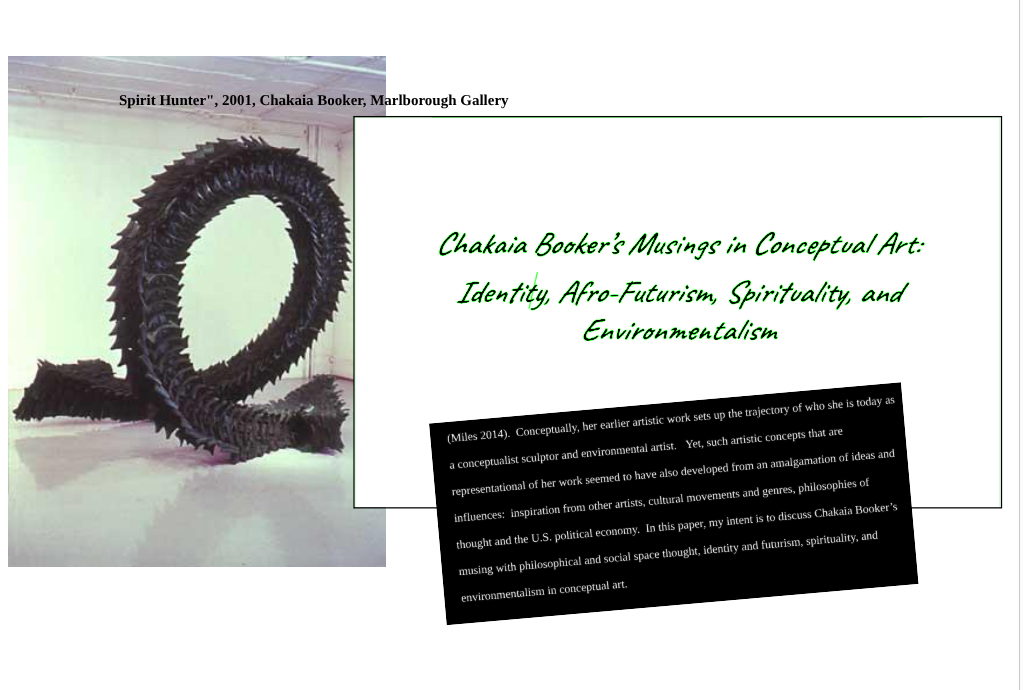
Chakaia Booker’s Musings in Conceptual Art: Identity, Afro-Futurism, Spirituality and Environmentalism
Abstract: The artist's sculptures are a manifestation of her own abstract thoughts about identity, culture, spirituality, gender, afro-futurism, and eco-conservation. Her ideas are a cultivation of works developed from artistic and philosophic influences, cultural genre movements and impacts of the U.S. political economy. With her contemporary works of art using discarded rubber tires, she attempts to reconcile the existing post-modernity and social environment with the possibility of a futuristic positivity.
Under-Privileged, African American Women in Atlanta as Low-End Commodities Under Neoliberalism and HIV-Related Policy Deliverables
Abstract: Low-income African American women in Atlanta are currently depicted as “at-risk” individuals due to increasing HIV infected rates in this population. In my direct participation within a HIV, STD and substance abuse prevention program that catered to this particular population, I took note of the silence in the discussions on how the US political economy contributes to these social conditions of HIV/STD and substance abuse risks. Within the same space, I observed the intricacies of how the market politically and economically benefits from the racial and gender inequities of these women through certain type of social programs, welfare reform and other neoliberal policies.
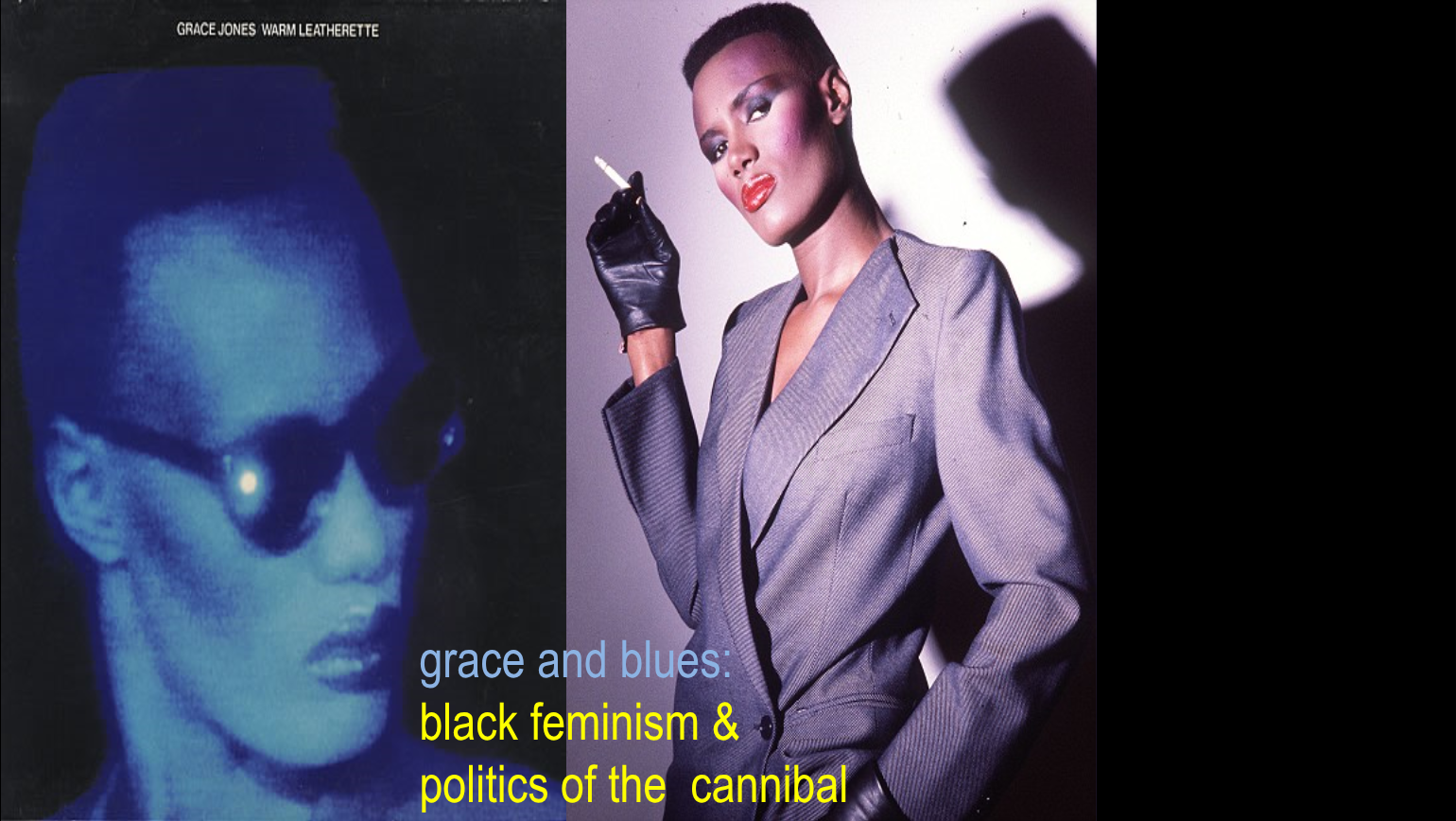
Grace and Blues: The Blues Woman, Black Feminism & Politics of the Cannibal
Abstract: Presentation is conceptualized from Angela Davis’ text: Blues Legacies and Black Feminism, whereas she analyzes the black feminist aesthetic within the early 20th century Blues woman, such as Ma Rainey, Bessie Smith, or Billie Holiday. She interprets their work as being a “consciousness raising” against the Black respectability politics of that time which was modeled from dogmatic principles of the traditional southern church. Grace Jones is a conceptual thought, contemporary articulation and channeling of the early 20th century pioneering traditional Blues Woman.
Comparison of Bessie Smith’s “poor man’s blues” to “corporate cannibal”. Both draws a lens on the oppressive control of bodies by the capitalist elite; connects the trend from post-slavery capitalism to the current state of neoliberalism.
Reproduces the concept of how a “…critical aesthetic representation of a social problem must be understood as constituting powerful social and political acts” thus publicly articulating “oppressive conditions” of a system (Davis 101).
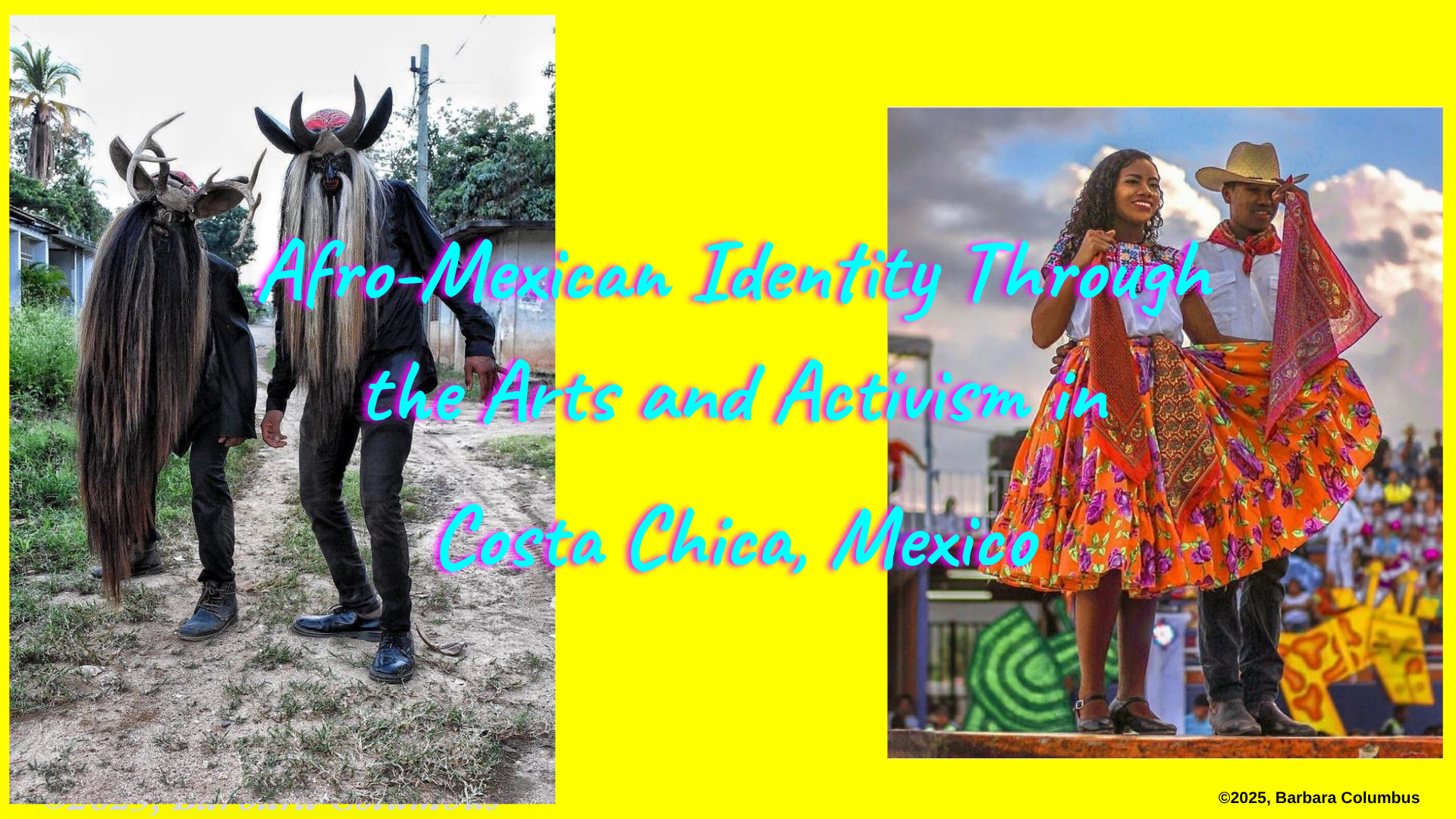
Afro-Mexican Identity Through the Arts and Activism in Costa Chica, Mexico
Abstract: The anthropological research discusses how Afro-Mexicans in Costa Chica are advocating for their identity, material culture, cultural preservation and ethnic solidarity through the social advocacy of art and activism. Such advocacy is also inspired by the Reconocimiento del Afro-Mexicano political campaign.