Nature, God and Theology: Symbols and Other Concepts Re-Purposed (2013)
©2026 Barbara Columbus
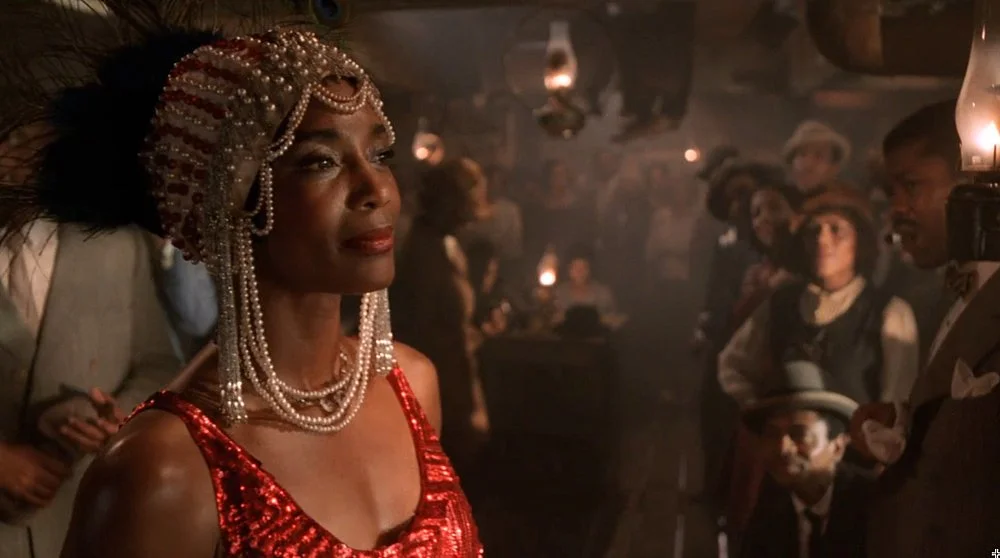
“Everything want to be loved. Us sing and dance, make faces and give flower bouquets, trying to be loved. You ever notice that trees do everything to git attention we do, except walk?”
-Shug Avery (Walker 196).
Not only are trees personified in these words, but the spiritual and natural essence of the Blueswoman is evoked from the word imagery too. Although the Blues woman is the widest purveyor of social consciousness under the blues form and she’s loved by many within the Black working class, she’s silenced and derided as the “devil” by the Black middle class and Christian church establishments. Angela Davis (124) notes, “…precisely because they offer enlightenment on love and sexuality, Blueswomen singers often have been treated as secular counterparts to Christian ministers…” The Blueswoman is characteristically unapologetic of her own existence and sexual agency – embodied in the character of Shug Avery (Davis 121-137). She, too, is vilified and dismissed by Christian church members and her own family. In one chapter of the book, she’d loudly expresses no indignity for things that she likes, “...What, too shamedfaced to put singing and dancing and fucking together?... That’s the reason they call what us sing the devil’s music.” (Walker 115).
In the above dialogue with Celie, Shug is making a spiritual affirmation of relativity, love and care of everything that exists (Walker 192-196). Angela Davis describes the West African tradition of setting the “transformative power” of affirmations into existence as “nommo” (Davis 128-129). The dialogue is also a healing moment between the cycles of pain and conflict in human relationships, the spirit world and natural world. The Color Purple author Alice Walker, philosophically shows the mimicry, overlap and interdependence of all three elements: human, spirit and nature or the intricacies of all in unison. She emphasizes these relationships throughout her book, though the narratives are centered on the vulnerabilities but also the resilience and intimacy of the Black women main characters. The book is a collection of intimate conversations between Celie and her Christian God about the uncertainties of her own existence and her relationships to other Black women navigating in a racialized, gender-stratified space in the southern region of the US in the early 20th century. However, further abstracting from the above dialogue, I will explore how Alice Walker’s concepts of Nature, God, spirituality, theology, love, intimacy, race and gender is captured in the film adaptation, The Color Purple. I suggest that symbols and concepts of Nature, God, race, gender and intimacy in the film are re-purposed for a mainstream western Christian viewership.
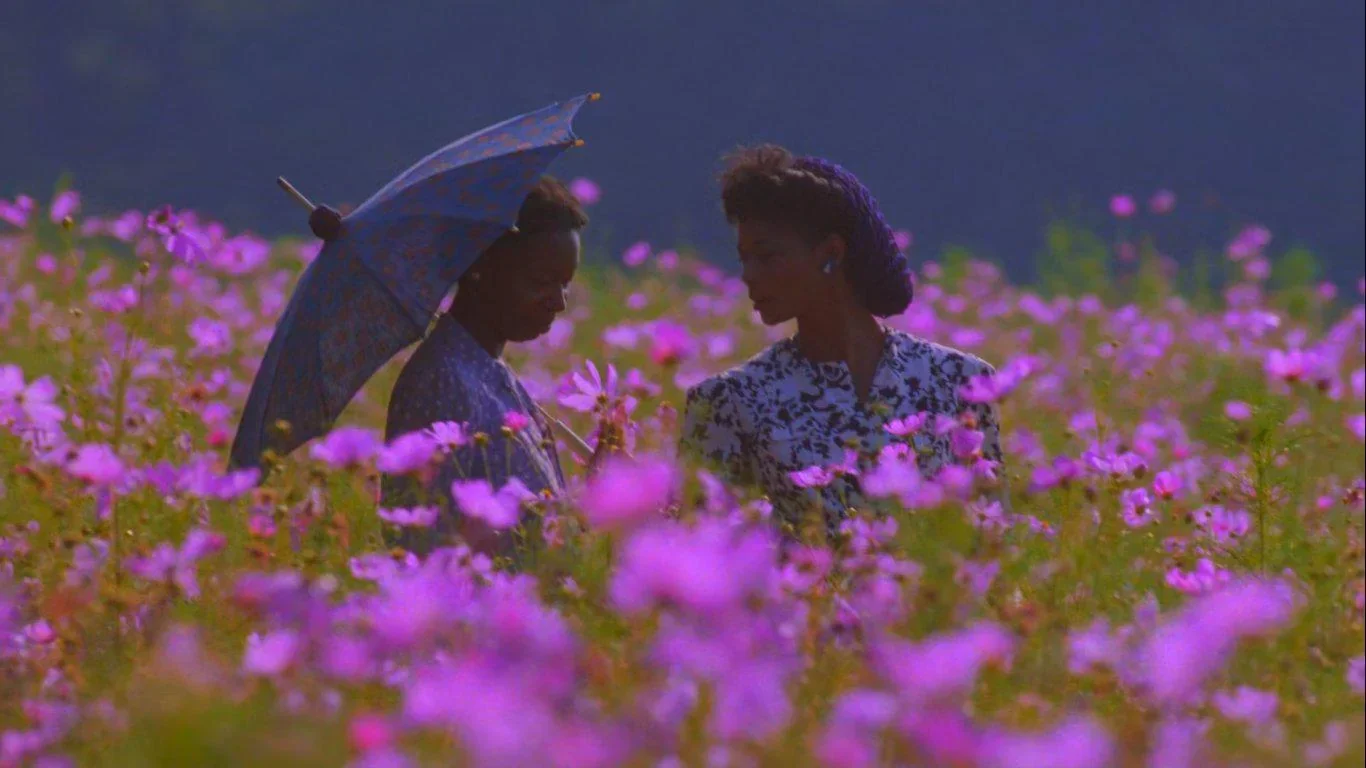
Alice Walker holds a personal, deep connection to how Nature explains to us about so much of who we are. In her preface, she talks about her early contentment to finding peace in Nature, “ ..because my spirit resolutely wandered out the window to find trees and wind during Sunday sermons, I saw no reason why, once free, I should bother with religious matters at all”(Walker Preface). She encompasses many aspects of Nature into the development of her characters, as signified in the above dialogue between Shug Avery and Celie. Based on the written text, Celie’s character in the latter stages - a freer, more mature developed character - expresses hurt and loneliness from her broken intimacy with Shug Avery. Using allegorical concepts to poetically make her point, she lectures to herself in second-person narration about her loss but also she uses representations of Nature to signify a stage in her life, “Even thought you had the trees with you. The whole earth. The stars. But look at you. When Shug left, happiness desert” (Walker 259). This aspect of the story was not captured in the film adaptation. The film director, however, did attempt to use symbols of the natural environment as accompaniments of the women’s experiences. When a very young, newly married Celie was carrying a heavy baggage load to Mr.’s house, she did so under rough, snowy weather conditions. This scene was textured with a harsh climate to signify the difficulty, coldness and detachment that she is about to endure being Mr.’s wife. Another example is the first evening that Celie met Shug Avery. It was dark, rainy and Shug Avery was inebriated and sick. The dark weather and setting created a mystique feeling for Celie as she discovered who Shug Avery was with admiration (The Color Purple Movie). Other than the dialogue between Shug and Celie and the symbols of the natural environment, Walker’s intent of conceptualizing on Nature, spirituality and human experiences doesn’t fully get captured the film which is to be addressed in the following.
Shug’s above noted revelation to Celie doesn’t just affirm her love for the belief of an all-encompassing Nature. It starts to put into question the reverence of a White, male supreme figure and White Christian theology, in which Black church establishments extract from. From the text, Celie is put into thought provocation, “Well, us talk and talk bout God, but I’m still adrift. Trying to chase that old white man out of my head. .. I never truly notice nothing God make. Not a blade of corn.. not the color purple..” (Walker 197). And so, the idea of the Blueswoman stood opposed to the concept of a male-supremacist theological institution that also appears to be permeated throughout society. This is also where Carol P. Christ, feminist theologian, piggybacks on in her writing, Rethinking Theology and Nature. She uses a lot of Walker’s material into her theoretical text and also calls for a new way of existing that stands opposite of the philosophy of dualism that separates man from nature. Her idea is basically seconding Shug’s premise that God/Goddess should not be conceptualized in the image of a man or woman; but the essence of everything (Christ 314 – 324). Ironically, the discussion between Shug and Celie regarding God, Nature and love goes no further than the deference to love, trees and the purple hue of the flowers in the field in the film. The aspect of The Color Purple text that challenges a white Christian-sanctioned God isn’t depicted in the film either. Being that this is a fictional film that is loosely based on a socio-historical period right in the turn of the new 20th century, the social effects of slavery, White religious patriarchy and colonialism still intersects the lives of Blacks. This film lacks that accountability. The symbols of Christianity, male supremacy and oppression are largely centered on the Black male characters and no interconnections from other hierarchies.
It’s not to say that criticism should not be held to Black Christian patriarchy, as Davis does address many criticisms of the Black church in aspects of its fear of sexuality. She suggests that the church helped to contribute to a “racialization of sexuality and the sexualization of race as it worked its way into the evolution of dominant racist culture...” by way of “the condemnation of sexuality and its representation and affirmation in the blues” (Davis 131). Shug Avery and Celie were lesbian lovers in Alice Walker’s text. But it was certainly nuanced in the film adaptation which is produced for a large distribution of a mainstream, western Christian audience.
While Walker’s purpose of the book is to address these issues using reconceptualizations of Nature and God, original concepts of the traditional Blueswoman and a Black Womanist consciousness to do the work of healing, that purpose isn’t fully contextualized in a theological sense within the film adaptation. The film adaptation had seemed to repurpose that vision in the lack of displaying a full Black Womanist consciousness and the book’s reconceptualization of Nature, God, theology, love, gender and intimacy.
Works Cited
Christ, Carol P. "Rethinking Theology and Nature." Reweaving the world: The Emergence of Ecofeminism (1990): 58-69.
Davis, Angela Y. Blues Legacies and Black Feminism: Gertrude" Ma" Rainey, Bessie Smith, and Billie Holiday. Random House Digital, Inc., 1999.
The Color Purple. Dir. Spielberg, Steven. Prod. Spielberg Steven, Kathleen Kennedy, Frank Marshall, et al. Warner Brothers, 1985.
Walker, Alice. The Color Purple. Open Road Media, 2011.