Chakaia Booker’s Musings in Conceptual Art: Identity, Afro-Futurism, Spirituality and Environmentalism (2014)
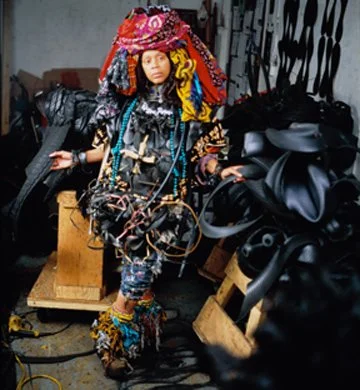
Chakaia Booker, an African American sculptor, originally from Newark, New Jersey, manifests her own abstract thought into postmodern and contemporary works of art utilizing discarded rubber tires. Currently based in New York City, she is more prominently known for her environmental sculptures and conceptualist art. She continued to hone into her artistic childhood skills - ceramics - after obtaining a sociology degree at Rutgers University in 1976. During this period in the 1980’s, Booker’s creativity with ceramics subsequently progressed into inspirations with clay sculptures. As well, she advanced with her particularly detailed and idiosyncratic fashion designs or “wearable sculpture” that she’s still notable for. In the 1990’s, Booker’s creativity eventually evolved to remarkable, recycled tire sculptures after being inspired by the idea that the many burned, distressed and abandoned car tires in her community could be re-conceptualized to a new value. Since her younger years, Booker’s mode of art practice had always been to recycle deconstructed or second-hand material. (Miles 2014). Conceptually, her earlier artistic work sets up the trajectory of who she is today as a conceptualist sculptor and environmental artist. Yet, such artistic concepts that are representational of her work seemed to have also developed from an amalgamation of ideas and influences: inspiration from other artists, cultural movements and genres, philosophies of thought and the U.S. political economy. In this paper, my intent is to discuss Chakaia Booker’s musing with social space, philosophical thought, identity, afro-futurism, spirituality, and environmentalism in conceptual art.
The social space that has encompassed Booker since the late 1970’s is fundamentally a reflection of post-modernism. Booker imparted unconventional ideas, non-conformity of traditional identity and essentialism due to disproportions of power, oppression, lack of self-subjectivity and inhumanity. Philosophically and aesthetically, Marlo David (2007) explains the period from the late 1970s to the current as the incipient phase of exploration into post-civil rights, post-soul, post-blackness, and post-humanism. The civil rights movement reached a quiescent moment. The musical conscience of the movement – soul music – also followed in the same direction. Post-blackness is a notion of the emancipation of the singularity or fixity of black identity. Post-humanism is a rejection of the restrictions of all that relates to the colonial ideals of humanism which includes the relegation of Blacks to subhuman or nonhuman categories. This would also be inclusive of the ‘Black church’ considering its founding based on colonial proselytization and sanctioning of slavery. Thus post-humanism, “… renounces all essentialized claims to Blackness” as was defined in prior decades and centuries (David 2007, 696). The performance of these concepts allows one to explore in self-identity while still having the possibility and self-subjectivity to entertain with residual black cultural products or also continue with commitments to social justice and liberation struggles, if need be. But also, there is a nuanced aspect of this social space that eco-feminist and Black science fiction writer Octavia Butler also explored and shaped with self-imaginative and optimistic visions of a futuristic Black people - Afrofuturism. Post-humanism ideology and practice, however, isn’t needed in this idealistic concept of Afrofuturism. In contrary to anti-essentialism, Butler and other artists introduced Afrofuturism as an ideological space where Black people seek positively into the future reconciling “between an imagined disembodied, identity-free future and the embodied identity-specific past and present, which….can express a radical black subjectivity” (David 2007, 697). In much of her future positive science fiction work, Butler was then able to assert various identities of Blackness along with intersections of gender, culture and ecology. But she also complicated her stories with narrations of systems of hierarchy and domination. Plisner says that she “creates a potential for new understanding of our global environment“, but further into his analysis of Butler’s sci-fi book Dawn, he states “she encourages the reader to identify environmental aspects as they relate to African-American culture in response to the significance of her use of trees” (2009, 147-152). Butler’s radical ideas are accessible to aspire to as they are contextualized to reflect on the US’s historical preoccupation with the nuclear arms race or Cold War thru the 1980s and the continuous US’ drug war that has significantly affected Black communities. Collectively, it is through the prism of such cultural shifts in ideologies and aesthetics, that I discern Chakaia Booker’s sculptural artwork.
Inclusive of the monochromatic consistency in most of her sculptures, Booker’s twisting, kneading, slicing and bonding application methods of recycled, rubber material is the persisting tradition of old, African improvisation and vernacular art implementation. One of Booker’s admitted visual art influences, however, is modernist sculptor Louise Nevelson. Nevelson’s artwork, too, are thoughtful assemblages of unappreciated litter, particularly wood. Booker seem to also have taken value of Nevelson’s biographical formations, as well, despite her marginalization as a woman artist, sculptor in the 1950s and then in her later progressions in the 1960s as a feminist (Hadler 2008). Nevelson’s art concentrates on large, flat surfaces with multi-layered, geometrically structured lines, and, as well with a monochromatic uniform. Her artwork feels very clean, matte and industrial-mechanized. Booker’s reflection of Nevelson’s sculptures appears to conceptualize on the resilience and arrangement of matter and the exposure of the obscured in black monochrome. Booker’s found sources in her own structures can be analyzed as an urban, deconstructed, free-forming or otherworldly version of Nevelson’s. On Babylon: Urban Landscape, 1996, Booker seems to share conceptual similarities with Nevelson’s City: Sunscape, 1979 with respect to capturing the idea of presenting a picture of the world through their own vision. Nevelson has constructed an assemblage of conformity; irregular-shaped, machine-like modules unified tightly within a black portrait frame. The inner modules are a matte finish of polyester resin. Babylon: Urban Landscape is an ethereal adaptation. It is a disassembled, black electromechanical abstraction walled within a landscape framework. The inner works of this arrangement are rubber inner tubes of bicycles. Both artworks make an interesting commentary on their vision of time and space. Booker took Nevelson’s clean, engine-calibrated, 20th century narrative and delivered farsightedness into an apocalyptic ecosphere with Babylon: Urban Landscape. The space and time of an awaited apocalypse is up for interpretation to the art patron. In Nevelson’s world, there’s musings of the early 20th century industrial world. In Octavia Butler’s sci-fi writings, the apocalypse takes place 21st century. For Chakaia Booker and inhabitants of inner-city environments at the start of the last two decades of 20th century, the apocalypse had alread been in effect. Booker’s anthology of work isn’t a collection of dark world prescience, however. Her work abstractly captures the wondrous dualities of the universe but with a particular social conscience.
As a conceptual artist, the identity of race, blackness and gender are elements that Chakaia Booker strongly navigates towards her work. As she manifested the idea to create sculptures using distressed and burned car tires abandoned in her New York neighborhood streets as her primary material resource, she knew that the condition of the tires was related to the collective social conditions of Black people, blackness and the particularities between Black men and women. The soft, resilience of the black, worn and abused rubber tires that Booker saw in the streets gave her reflections of the physical characteristics and strength of Black people (Huang 2011). Many curators are able to make an ostensible connection between the abstract and various black skin tones, shade and textures (Nichols 2004). Values of ideas such as post-human, post-black or post-gender incorporated in expressions of art to conceptualize on anti-essentialism of blackness, racism or the superficial construction of race nuances the collectivity of social organization, not remove the power of racism or misogyny. Hence, bell hooks’ concern of postmodernism’s potential to lose focus on social justice and black liberation (David 2007). Whereas postmodernity advocated social liberation and expanded expressions of identity of the self, the nature of inequality still persists. And though, Booker exploits the power of abstract art in a post-modernism manner, concepts such as post-black, post-gender or post-human are of no use to her conveyance. She celebrates the collectivity of blackness, but the multiplicity of blackness. She confronts race and racism. She celebrates the idea of being a black woman or black man. She confronts misogyny and devaluing of black maleness. Following are two examples of her work that confronts black and gender identity.
Reclining Torso Breastfeeding Herself, 2000 is an abstract sculpture that is a poised, opal-shaped feminine figure, reclined horizontally and with an extended side. There are arrays of rubber slices spiked all over the surface of the figure. The sculpture is an abstraction of a Black female’s torso. The spike application on the exterior surface of the figure is actually signifying energy and a spiritual essence surrounding the torso. Booker is conceptualizing a nurturing soul. But also, there’s a double entendre in this figure that is used to contrast gender and race ideology. Modernist sculptor Alexander Archipenko constructed a black, ceramic glaze sculpture in the early 20th century, Reclining Torso, 1922, which Booker may be using as a similar reference point in her own figure. In spite of her own executed representation of a female figure in a reclined posed, Booker is also making a commentary regarding gender expressions and common depictions of the female body. Booker is addressing with humor how Archipenko and other artists with various mediums commonly depict the female body in the stereotypical, nude, reclining pose. With the execution of her own sculpture, she’s suggesting the redundancy and sexism of such common depictions. There’s satire in this deliberation, though. The idea of a Black woman artist constructing a figure of a nude, Black female torso breastfeeding herself would be interpreted as the profane, ungodly, unnatural or less than feminine. The notion of a woman breastfeeding herself would be akin to female masturbation. I hypothesize that the relevance of a particular critique of the expressions of the Black female body perhaps given in the early 20th century would be as constant in the early 21st century. However, the stereotypical, nude, reclining pose that has been commonly produced by white, male sculptors would be highly regarded with esteem.
Another sculpture representing black gender social commentary is Male Torso That Has Left His Path, 1992. This is a bulky figure of worn out layers of tires knotted and distorted into the shape of a male torso. The worn tires represent a beaten path that only a black male experiences. There’s also very distinctive discoloration in the wearing of the tires, which signifies the distress of a black male figure that is retiring from his long term journey in life. The intertwining layers and knots of the tires create a strong and bulky build of the sculpture – a representation of black masculinity. However, the torso also appears to expose the male genitals, which also superficially superimposes on the idea of black masculinity. Booker is conveying the complexity of black maleness. The same exterior façade that he revels on - enduring his life’s path - becomes too worn and distressed to maintain. It eventually retires.
As mentioned earlier, Booker’s art works in the African tradition of improvisation. And as well, the sculptor conceives on ideas of traditional African spirituality throughout her work. In reiteration, the idea of Afrofuturism negates the purpose of post-humanism, however, bridges a connection to spirituality that holistic. Spirit Hunter, 2001 seems to convey the idea of rounded sacred energy that satisfies the health and humanity of Black people. The sculpture is an oversized, rib-textured, reptilian loop. The reptilian loop sculpture is signifying an African serpent spirit associated with the Mami Wata goddess. The serpent is known for offering protection, water, healing. The construction of the figure in 360 degree orientation conveys the rotation of the cosmic universe (“Snake, Spirit, and the Kundalini”). Nomadic Warrior,1998 is reverence to tradition African spiritual masks. The abstract art expresses no color detail or specific facial features; however, the elaborations of the knots and twists in the artwork and the basic black properties of the tires are very strong and complex. There’s a long feature that centers downward like a muzzle. The strong details of the knots and twists are mystical, intricacies of strength and energy and perform as a spiritual vessel of power.
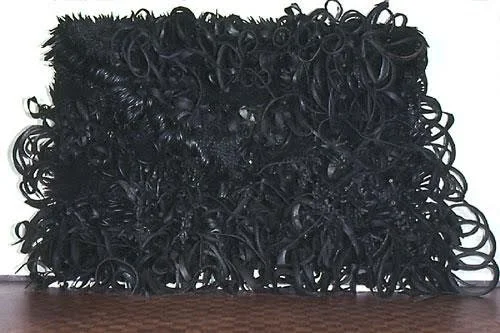
A major concern of Chakaia Booker’s is the environment. Her work with rehabilitating used and abused tires attempt to recreate energy by turning into new found abstract art objects. Her creativity and critical concern for the environment ties in together so that it makes her artwork so dynamic and personable. But Booker’s main point is to not explain art, identity, humanity, futurism, spirituality, and culture as separate entities. “My intention is to translate materials into imagery that will stimulate people to consider themselves as a part of their environment— one piece of it” (Castro 2003). In 2006, she designed Remembering Columbia, 2006, a star particle designed from the found pieces of tire of the exploded Columbia space shuttle in 2003. The ardor and energy expressed by this artifact couldn’t be any further from conveying Octavia Butler’s ideas and goals of technologic and futuristic possibilities – Afrofuturism. As well, the holistic nature of traditional African spirituality, Booker makes her eco-consciousness relative and all-encompassing by promoting the fact that rubber is developed from the organic source in varieties of the Hevea brasiliensis tree which is found in indigenous societies in Africa, South Asia and Central America. Rubber, the commodity, is commercially produced in Akron, Ohio, however. By making rubber a 360 degree global environment concern, she’s also drawing attention to the imbalances of labor and neocolonial economic slavery. Her exhibit, It’s So Hard to Be Green, 2000 in the Whitney Biennial addressed the issues of arborous sustainability and the indigenous communities that surround trees and other plant life using interchangeable metaphors within the sculpture. The artwork is a wall full of lush, romantic loops of black rubber. It represents a verdant bush full of roughage leaves. Booker is capturing the idea that although rubber is developed from a raw material in a green environment, so much little value or regard is taken on that fact. Albeit, the organic source is green, it’s discernibly black rubber product produced in a factory. The black interchangeability with green is to make art patrons realize the obscurity of the organic and life force, not the superficiality of a commodity. Exploitation of this natural resource is taken for granted. The metaphor is interchangeable with Black Americans or indigenous communities.
Socially, Chakaia Booker’s seems like a quiet, unexpressive spirit. However, her artistic execution has a very deliverable presence. She sometimes uses unassuming satirical humor to express her concerns. Her sculptures are a manifestation of her own abstract thoughts about identity, culture, spirituality, gender binaries, futurism, and eco-conservation. Her ideas are a cultivation of works developed from artistic and philosophic influences, cultural and genre movements and impacts of the U.S. political economy. With her contemporary works of art using discarded rubber tires, she attempts reconcile the existing post modernity and social environment with the possibility of futuristic positivity.
List of Illustrations
Figure 1 - "Wearable Art Sculpture”, Chakaia Booker, New York. Photo taken by Nelson Tejada, 2003
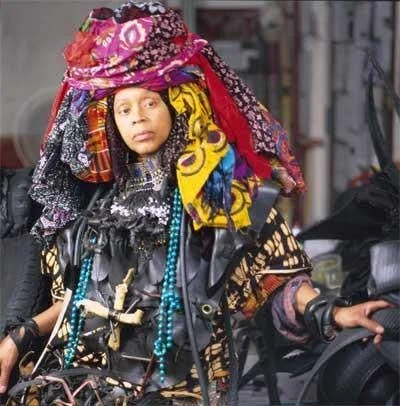
Figure 2 - "Babylon: Urban Landscape", 1996, Chakaia Booker, Marlborough Gallery, 2001
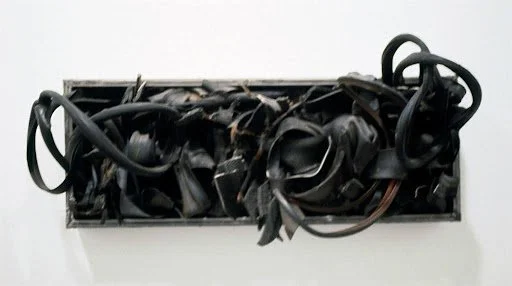
Figure 3 - "City: Sunscape", 1979, Louise Nevelson, The John and Mable Ringling Museum of Art
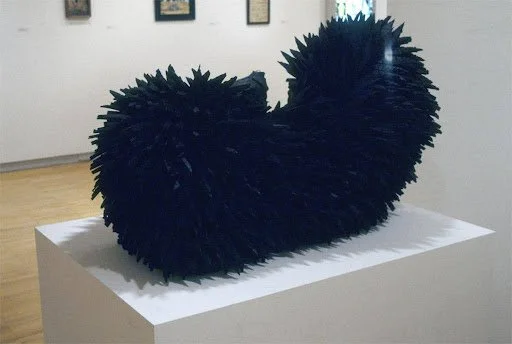
Figure 4 - "Reclining Torso Breast Feeding Herself, 2000, Chakaia Booker, D.C. Moore Gallery
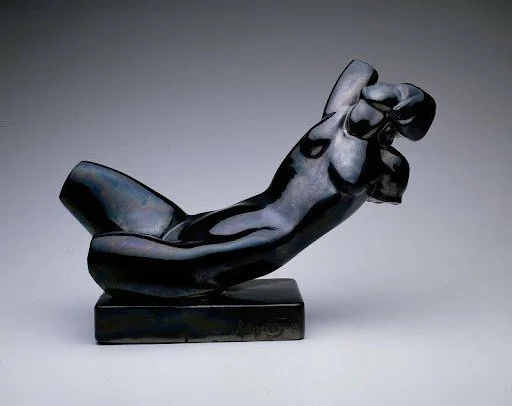
Figure 5 - "Reclining Torso", 1922, Alexander Archipenko, The Art Institute of Chicago
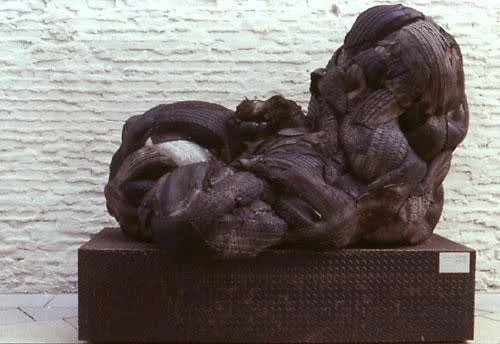
Figure 6 - "Male Torso That Left his Path", 1992, Chakaia Booker, Max Protech Gallery, 1996
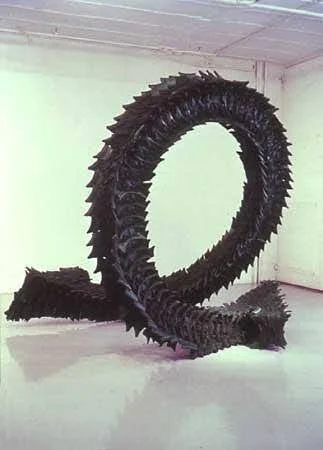
Figure 7 - "Spirit Hunter", 2001, Chakaia Booker, Marlborough Gallery
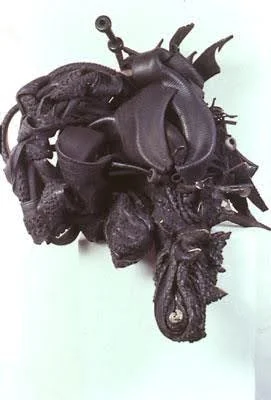
Figure 8 - "Nomadic Warrior", 1998, Chakaia Booker, Exhibit Unknown
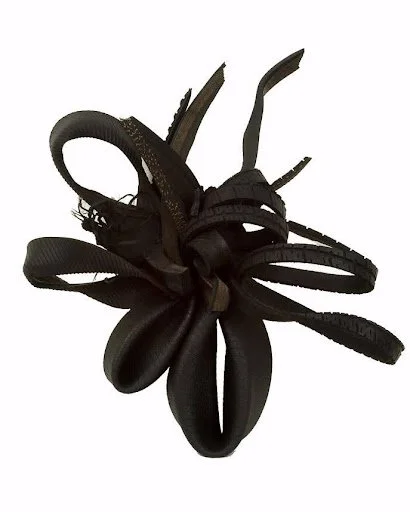
Figure 9 - "Remembering Columbia”, Chakaia Booker, 2006, National Air and Space Museum
Bibliography
Castro, Garden Jan. 2003.22. “Language of Life: A Conversation with Chakaia Booker.” Sculpture 22 (1).
Castro is a sculptor critic. In this article, he provided an in depth interview with Chakaia Booker to discuss biographical items and her artwork. This is interview is referenced for primary research on Booker.
David, Marlo. 2007. "Afrofuturism and Post-Soul Possibility in Black Popular Music." African American Review (4): 695.
Marlo David discusses the politics of complex identities in the context of African Americans within a postmodern world. He then analyzes current deliberations in shifting toward the future.
Huang, Melissa. Women in Art: Chakaia Booker Elthemes // Stella Wordpress Theme, 2014.
Melissa Huang is an artist with an online blog that reviews the work of women artists. In 2011, she provided an insightful feature review of Chakaia Booker’s work with rubber tires. This review was used as a reference to objective data on Chakaia Booker and to access certain artwork by the sculptor.
Moore, Miles. 2014. "These Artists Don't Tire of Tires." Rubber & Plastics News 43 (17): 15.
Moore provides a feature review on Chakaia Booker’s art innovation using rubber. It is mostly biographical than an art critique. This source is used as a reliable insider source on Booker as an artist.
Mami Wata: Snake, Spirits and Kundalini Snakespirit, 2010. Accessed 05/02, 2014. http://snakespirit.webs.com/mamiwata.htm
This online source is a discussion blog that contain information about a traditional African religion, Mami Wata. This source was used to detail iconographic meanings of the serpent as it pertains to Mami Wata.
Nichols, M. G. 2004. "Chakaia Booker: Material Matters." Art in America 92 (6): 164-169.
Nichols is an art critic. In this article he provide a review of Chakaia Booker’s overall promising work as she prepares to be housed in her home state at Jersey City Museum. His article is referenced for primary research on Booker and sourced as a reliable insider source on Booker as an artist.
Plisner, Andrew. 2009. "Arboreal Dialogics: An Ecocritical Exploration of Octavia Butler's Dawn." African Identities 7 (2): 145-159.
Plisner provides a literary analysis on Octavia Butler’s book “Dawn”. His discussion reaches the topic of how Butler addressed futuristic Black identities and environmental issues in her book. This source is used as a reference on the engagement of Afrofuturism and how Butler’s vision of Black sci-fi and eco-consciousness has influenced poignant and forward-thinking individuals such as Chakaia Booker.
Hadler, Mona. 2008. "The Sculpture of Louise Nevelson: Constructing a Legend." Woman's Art Journal (1): 57.
Hadler provide a review on the biography of feminist sculptor, Louise Nevelson. This source is used as reference on factual data on the artist and as a review on her greatest work. The information on Louise Nevelson was also used in creating an analysis on how sculptor Chakaia Booker progressed, complemented and contrasted from studying Nevelson’s work.
Figure 10 - "It's So Hard to Be Green", 2000, Chakaia Booker, Whitney Biennial