Restorative Justice and Ethopolitics (2020)
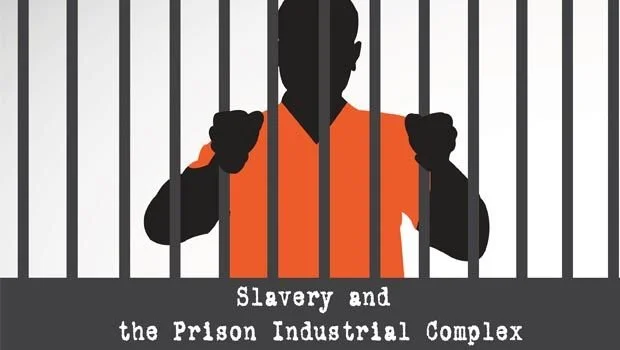
Photo via messageinternational.org
Introduction
My first reference of restorative justice was with a social media post that highlighted community healing program prescribed to those Rwandans that were affected by the 1994 genocide tragedy. It was a program that sought to heal and repair the psychosocial trauma through forgiveness therapies, counseling, healing circles and other methods as an alternative to retributive punishment. Given my very limited knowledge of the practice, I became very curious about an approach that seemed really holistic and sensitive but also very different to my own western understanding of inequity, social harm, and retribution. So, with an exploding population of approximately 2 million individuals disproportionately entrapped in the U.S. incarceration system, I pondered on what a restorative justice program would look like stateside. (Rhodes 2001:65)
Prison Industrial Complex
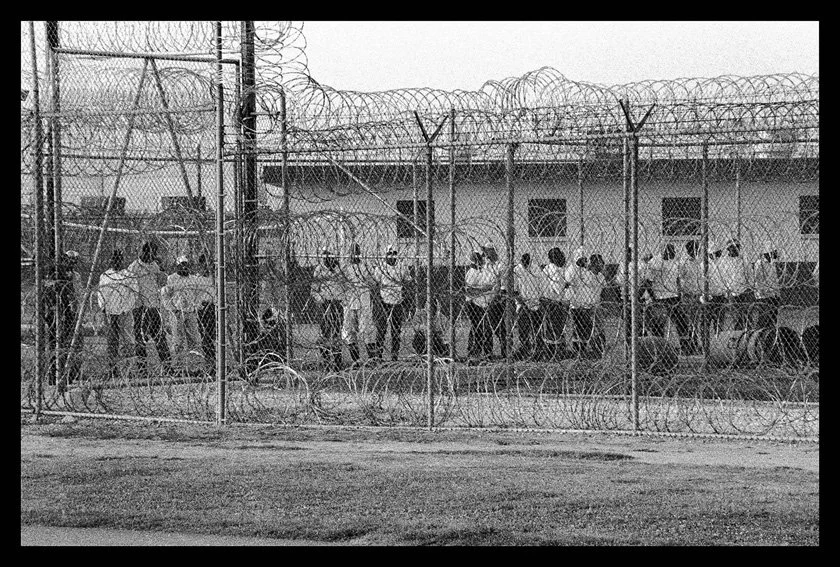
Since the 1970s, the prison rates have been escalating significantly signaling a loud alarm that serious attention is needed. (Rhodes 2001:66) Beyond the edifice and constructed reasoning of the prison industrial system are various complex intersecting layers and social relationships that are indexed to the context of ‘how’ and ‘why’ we are at this point in time in U.S. society. The incarceration structure has manifested from a capitalist system; inherently intertwined with property and labor, and that has matured into a multi-prong, neoliberal machine. It structurally produces oppressive values about race, class and gender, etc. and then materially gains from criminalizing those particular socialized bodies. There appears to be a limited concentration in prison anthropology work. Rhodes (2001:74) draws inferences to struggling to see “prisoners as men” as opposed to “men as prisoners”, while at the same time women prisoners are historically invisible from much research and literature. There seems to be an unspoken, internalized concept of seeing prison as the facility that alienates and contains male and female bodies. Any human social conditioning aspect that is only seen at the surface level cannot be consciously realized. Such discords provoke genuine inquiries on how social harm is factored and redressed in the prison system, as well as, in society.
Retribution
The 19th century in Europe was transformative in restructuring the concept of power and punishment. One can look back at history as a great paradox for retributive punishment, as it was sardonically referenced as an emergence of the: “The Gentle Way In Punishment”. During that time, retributive punishment entered and supplanted the earlier conventions of physically marking the body with brutal pain. Retributive punishment became a symbolic representation of "pain" that is not physically endured. The concept of penalization had been reformed whereas the body is visually seen but becomes the silent referent. It warrants the question: “If retributive punishment was promoted as being relatively ‘gentle’ at that time, then what is the definition and visuality of punishment in the 21st century?”
Power and control mechanisms are still maintained within the systemic transformation. But, they have become more indiscernible…. (Foucault 1977) As the current high incarceration rate is contemplated, people should inquire about the contemporary retributive system and its capability to operate as a holistic judicial system. Today, retributive justice is defined as: “...the reestablishment of justice through unilateral imposition of punishment on the offender consistent with what is believed the offender deserves.” (Wenzel et al. 2008:375) But, the given tone of the language projects a system that is too archaic for the current times. The passiveness in the language conveys an one way-directional engagement over another active body. What are the social consequences of unilateral punishment?
Social Harm
I’ve taken note of various disciplinary discussions in the care of shifting the epistemological focus from criminology to social harm. I am quite surprised that this seems to be a relatively contemporary dialogue. It should be noted that social harm varies and intersects through many disciplines. Aleš Bučar Ručman gauges the relations between harm and crime. I utilize his expertise as supporting details to the material sensitivities engendered by the machinations of capitalism, imprisonment, power, racism, poverty, etc. The connections to harm are drawn in various ways. (Ručman 2019:222–223)
Harm is associated with the abuses of power and the specific consequences of crime. Harm can materialize but it’s not always evidenced with visibility, even affecting the psychological, cultural, physical and socioeconomic body. Harm depreciates the holistic potentialities of an individual; whereas it causes an upset to a victim’s position or status. Albeit, victims are not always capable of discerning their position or victimization, due to variables like exploitation, ideological, etc. Harm can get complicated in the reciprocation of an act that is proportional, like that of self-defense.(Ručman 2019:211–223) Ručman (2019:222) cites Milovanovic and Henry’s parsings of harm: “...expressions of power by which something is taken away (reduced) or there is a systematic limitation of another person’s capabilities and they are stripped of power by repression”. How does harm get reconciled?
Prison work and Anthropology
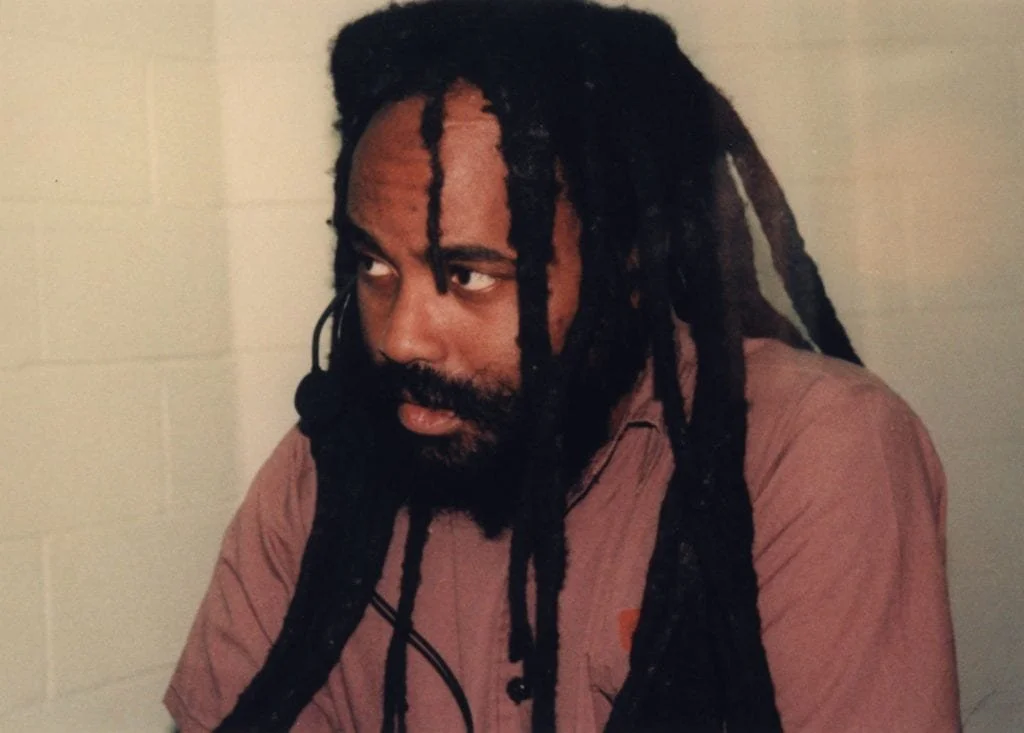
Political Prisoner Mumia Abu Jamal
Dr. Burton does scholarly advocacy on the writings of long time political prisoner Mumia Abu Jamal
Dr. Orisami Burton, Anthropologist, works on prison abolition and policing. He also advocates for harm reduction and “non-reformist reform”, whereas he believes that communities’ rights to exist should be based on human needs, rather than for the rationale of the existing economic system. The contradiction in “reformist reform” lies in the basis of it being too conventional and “value neutral”. There’s constant rhetoric reproduced from contemporary politicians that seek to reform the police and prison systems. The problem is that they continually propose similar reforms from the same structural system that developed long, historic, racist problems. They only offer meaningless prescriptions that will perpetuate the same problems of the past. Burton references Color of Violence Anthology as a collection of voices of Black and Brown women detailing their history of reducing harm suffered within their communities, as well as the harm created by the State. Burton says : “They have done this with the understanding that the communities themselves are the agents of harm reduction, not the State criminalization system”. I follow with similar concerns of the incarceration and violence problem. Hence, I seek to understand how restorative justice reconciles the prison industrial complex. (Mallory & Burton "Abolition 101")
The United Kingdom has been incorporating some basic restorative justice concepts to a punitive-based approach on a small-scale since the 1970s. The goal was to repair harm and reduce recidivism. The police employed destructured conflict management skills at the street level. Probation agents incorporated rehabilitation activities that were offender - focused. However, the social harm of victims was not prioritized within the activities. Operating from a top-down philosophy, public accountability and law and order protections were emphasized which placed strains at the higher administrative levels. (Magalione) There seems to be something conceptually incoherent with the idea of utilizing law enforcement - bearers of weaponries and technological controls - as social health counselors.
Defining Restorative Justice
Restorative justice is contextually diverse in its interpretation and practice. The space between the intent and practice could be multi-vernacular and convoluted. But also, allowing the multiplicity of these ideas should be permissible in the order of creative exploration. As Winslade suggests (2019: 280), its utility between social justice and procedural justice is very distinct. Clarity in the delineation is useful. This purpose of this section is not necessarily to concretize a particular definition but to work with the generalities and also to demonstrate the wide variety conceptualizations of restorative justice and its intended uses. It’s extensive. Maglione’s interpretation of the United Kingdom’s standard contemporary language is of an infrastructural power shift from a top-down, vertical-space in the conventional justice milieu to an individuated-empowered, bottom-up, horizontal-space with the directly affected stakeholders engaged. The process is initiated with the offender’s proactive acceptance to repair harm and directly interface with the victim and the community which performs an invested role in collective accountability and moral coherence. Reparations are reconcilatory to the consequences of harm and are transformative interpersonally. (Maglione 2019) A few sources seem to agree with Tony Marshall’s definition: “Process where parties with a stake collectively resolve how to deal with the aftermath of offence and implications for the future.” (Ashworth, 2002: 578) (Latimer, Dowden and Muise, 2005: 128) Ashworth (2002: 578) also considers it as any actions determined to achieve a result that is appraised and satisfied by the stakeholders affected by a crime and also that is followed by reintegration for each individual case; irrelative of the outcomes or consequences of other similar cases and conferences. Daly (2002: 58) criticizes the “purist model” that’s haste to mull over processes more than the end goal for reparations and that potentially perpetuates more harm by coercing responses. A “maximalist model” works in details towards justice and repairing harm from a crime. McCold’s venn diagram rates certain practices on the merit of its holicism:
(1) Three circles intersecting and encompassing victims' reparations, responsibilities of offender and resolutions of the communities; encircled within peace circles, sentencing circles, conferences, etc.
(2) The external bounds of the conjoining circles reconciles through candidness and mediation.
(3) It consists primarily of reparation commissions and conferences for youth.
Daly (2002: 58-59) also takes issue with some advocates defining restorative justice strictly on the basis of it not being retributive in function, lacking any nuances and presuming positivity and superiority over all elements and formalities of retribution; while regarding the latter with all negative characteristics. She refers to it as a “sales pitch”, idealizing the absolute purity of an item without any potential for fused elements or interdependencies. (Daly 2002)
History of Restorative Justice
As to be expected, the historical uncoverings on restorative justice seem contentious, ambiguous and unsettled. Omale analyzes Elmar G.M. Weitekamp’s extensive text that other theorists have either recontextualized within their own work or have contested. Weitekamp informs that restorative justice doesn’t align under new age ideas. Such practices were prevalent during “acephalous societies” and “early state societies”:
“Ancient forms of restorative justice have been used in societies and by early forms of humankind. Indigenous people such as the Aboriginals, the Inuit, and the native Indians of North and South America have used family group conferences and circle hearings. It is kind of ironic that we have at the turn of this century to go back to methods and forms of conflict resolution, which were practiced some millennia ago by our ancestors.” (Omale 2006:40)
Omale contemplates others’ contestations or reflections of Weitekamp’s ideas as he considers the still prevalence of Ubuntu tradition in some African spaces, the valuation of whole personhood. He theorizes that rural village spaces are still predominant whereas people still resolve disputes informally so as not to disrupt the economic accord within the community and to avoid urban police and a limited criminal justice infrastructure. (Omale, 2006: 40-45) (Omale, 2006: 40-45) Omale (2006: 41) also highlights pre-colonial indigenous practice like the Maori of New Zealand that various restorative justice advocates persistently promote. Daly analyzes (2002: 62-63) whether such advocates are romanticizing and appropriating orientalist tropes for the justifications of contemporary practice. Her conflict is that they are conflating deliberations from the past with the current which are different in context. Modern ideas of conferencing have been superficially attached to Maori’s historic roots. According to Daly (2002:63), conferencing actually spawned from the 1980s with Maori’s strife with the state's welfare and criminal justice systems. “But...devising of a (white, bureaucratic) justice practice that is ...accommodating ... cultural differences does not mean that conferencing is an indigenous justice practice.” Lastly, Richards criticizes (2006: 9-18) Weitekemp’s attempt to “rewrite history favorably to the ‘restorative justice’ project” as he esteems Bentham, Garofalo, Ferri and Wilson as pioneers of the program. She questions his credibility given that Bentham is known for Panoptican prison design; Garofalo and Ferri promoted capital punishment; and Wilson is known for the infamous “broken windows” and biological determinist ideas. (Richards, 2006: 9-18) Deducing from the details of such given history on the concept of restorative justice, there appears to be some detail that suggests prehistoric customs varied in conflict resolution and some forms of restitution, albeit, some also take issue with what may be a case of contemporary historical revisionism for ulterior purposes. While history provides a baseline to mapping the trajectory of an element, I seek to explore the merit of contemporary restorative justice work in the context of reconciling the paradigm of the U.S. incarcerated.
Foucault Discourse
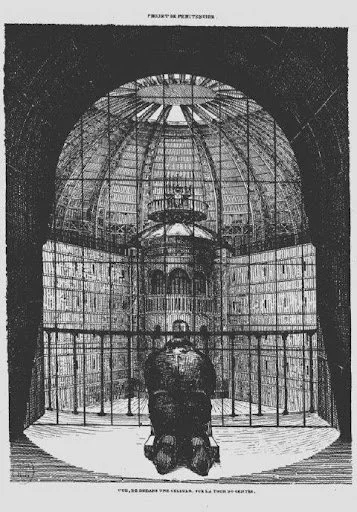
Panopticon
Source: California Digital Library

Surveillance and Society
Source: Duke University
As I ponder on the possible relationships between incarceration, violence and restorative justice, I also consider Foucault’s insight in Discipline and Punish: The Birth of the Prison,on the power apparatus that has helped to manifest the contemporary environment. Foucault mapped how the mechanisms of power had transformed and shape-shifted from physical representations of power and punishment to abstract elements. Punishment is no longer tangible at the surface level. The idea of punishment is manifested deep-seated into the subconscious with the intention to overpower individual’s will. It’s been disciplined. Thus, the focal point of power at the state is dispersed. Power has been distributed externally and absorbed into micro-level entities as society is invested into the political economy of punishment. The system is reshaped as the political economy is centered or intersected around the laws. (Foucault 1977) Society becomes a reflection of both the material conditions engendered by the economic system and the restructuring of the legal/ juridical systemic process. A reformulation of activities - motivated by their fiscal or political nature - became branded as illegal or criminal. (Foucault 1977) Just like Brett Story, author of Prison Land: Mapping Carceral Power across Neoliberal America, was able to draw the varying relationships within a range of spaces that elucidated their interdependencies, Foucault drew the connecting relationships that bind individuals into self-regulating conformities of their environment. (Story 2019) (Foucault 1977) Power is omniscient and omnipresent. But, it can also be indiscernible to the naked eye. It’s inescapable because it’s internalized, without a triggering awareness of one’s own subjectivity. The discipline conditioning homogenizes and organizes individuals - by meritocracy - into classified hierarchies, interconnecting mutual characteristics of disciplining behavior and thought within varying institutions. The invading power socializes and programs thoughts and bodies to respond to the binaries of gratification and punishment. Society is self-guided into the monstrosity of an interdependent, mutually-engaged labor and prison system. All of such revelations of an all-encompassing power is masked under the rendering of a sophisticated, secure and benevolent society; in spite of the physical wares of the militarized policing system. However, power is to be maintained through the discreteness of its technologies of knowledge. Thus, society is programmed into further individualization, compartmentalization and surveillance. (Foucault 1977) Foucault relativizes these techniques of power into the prison space: “The prison ...has to extract unceasingly from an inmate a body of knowledge that will make it impossible to transform the penal measure into a penitentiary operation…..that will be of use to society” (Foucault 1977:234–235) Foucault illuminates the characteristics and motives of the power apparatus. But to situate it into the context of restorative justice work and a dire approximate 2 million incarcerated individuals, it requires an ascertaining of how each engages in the utility of one another.
In the aforementioned, I inquired: how does restorative justice reconcile the prison industrial complex? Restorative justice is perceived to be a practice that exhibits its independence from the state to assure accountability and negotiation with the stakeholders affected by an offense. However, as Foucault untangled the intricacies of the modernized apparatus, it’s noted that the state is only a component of a whole larger colossus. (Sawyer 2015) The tentacles unassumingly branches out far beyond a central location. An underlying purpose would be to understand the implications or complications, if any, between restorative justice practices and the modernized apparatus. In addition, as noted previously, Foucault conveys the intimacy between the political economy, labor, property and criminal illegality. As well, I am interested in understanding how restorative justice’s advocacy against punishment, as it is conventionally known, complicates or transforms the power mechanism. (Foucalt, 1977)
Social Justice Focus
Source: The Sentencing Project
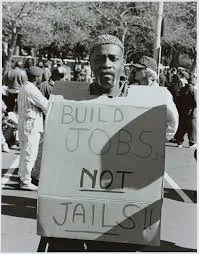
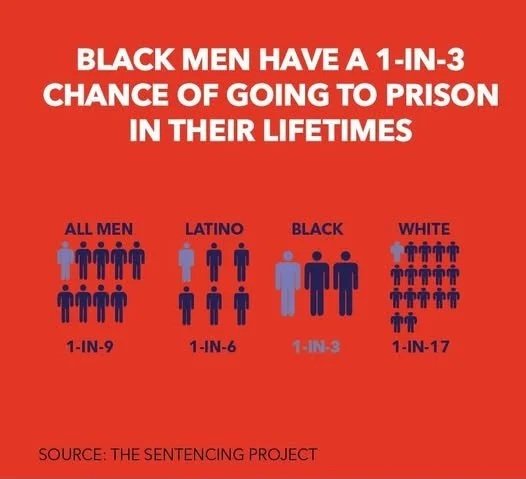
There’s a wide range of studies on social harm, violence and prison work from various disciplines. With the U.S. having the largest incarcerated population globally, disproportionately confining Black, Brown and poor people, there’s no doubt that there’s a social justice crisis that has yet to be controlled. (Rhodes, 2001:66-67). Indeed, Burton affirms that his own abolition work and other essential groups utilize the practice for the purpose of social justice. (Mallory & Burton "Abolition 101") However, every practitioner’s application isn’t aligned within the same intent. Dr. Winslade (2019) prompts the question in his article: “Can restorative justice promote social justice?” He sets some parameters to qualify what is deemed as social justice within the work of restoration using significant ideas of Foucault, as well. The overall goal should be explicit in its focus for anti-oppression. This intent should also match the efforts of allowing a relational discourse of interested parties to participate and express themselves without any constant dominant interjection by professionals. UK’s restorative justice philosophy assumes a functionalist, human needs-based requirement with universal principles. Their practices transcends the visuality of gender, ethnicity, class and religion designates. It’s with hope that the observances of universalism don’t preclude the awareness of significant data points that implicates social patterns that could assist stakeholders in uncovering social complexities. (Maglione 2019) As noted in the aforementioned, the extrapolations of the incarceration phenomenon are the social differentials that clearly breaks down the disproportionate factors of race, class and gender. These are the social realities that restorative justice advocates need to candidly confront. Winslade (2019: 284) talks about the “dividing practice”, the intentional domains “in a social world that decides who will live a life of privilege and who will eke out an existence on the margins” that are designated by the social stratifications. The marginalized and privileged layers are significant as they map specific narratives, encounters and entangles throughout society. They are significant in contextualizing along the lines of injustices. Along this point, the complexities of the power relations should be evaluated and factored in this perpetually shifting global society due to the reality of inconsistent, new patterns of power relations. The victim and offender encounter relations are known to traditionally depict along the conventional, vertical power relation lines; that usually pathologize and reproduce certain behaviors with crime. (Maglione 2019) Conversely, if the oppressed is committed as the offender; or the oppressor is committed as the victim, it should be evaluated as being material to socioeconomic reality, thus, a social justice matter. Albeit, powerful victims or victims of economic crimes would not qualify under the criteria for restorative justice. (Maglione 2019) In such circumstances, the lines of force could possibly depict relational exchanges of an incident between both parties whereas the oppressed (offender) was reacting to the oppressor’s (victim) subjugating constraints; in self-defense, for example. The offender rendered her/himself as a victim by the default of their own actions. (Winslade 2019:283) Winslade relativizes Foucault’s (2019: 282) power analytics analysis, whereas new patterns are materializing showing that the usual vertical lines of power dominated by the authoritative, affluent figures are not always the case anymore, globally. He noted the trending of professional power “is steadily increasing and was particular about showing that power relations were all over the place in the modern world.” This essentially speaks to Foucault’s sentiments about the further imperceptible dispersal of the power apparatus and that makes it less discerning to the upclose observations. State Responsibility and Criminal Justice Ashworth is a criminal justice discipline that is observing the gradual decentralization of the state, the shifting themes on individualism and responsibility, and the emergence of restorative justice discourses. (Ashworth 2002:580) In spite of Ashworth’s revelations of the perceived diminishing government edifice, the incarceration rates continue to escalate. (Mallory & Burton "Abolition 101") (Rhodes 2001) (Tauri 2016) This clearly draws in more questions into the particular variances and the specific focused initiatives of restorative justice practices in light of the extreme incarceration rates at this current time. In so far as the idea about the State’s stability, the edifice of the powerful structure isn’t so deliberately unstable; as much as the decentralization indexes to more potential emerging diffusions and techniques of power, as Foucault observed. (Foucault 1977) Ashworth expresses ambivalence with the idea of entities such as restorative justice organizations being independent of the criminal justice system. Albeit, he acknowledges the state’s own less than stellar human rights records, as evident from the current incarceration rates, Ashworth argues for the state’s obligation in preserving the security, confidence and legal consistency of its citizenry. The legal consistency that he speaks of defers to restorative justice’s case-by-case approach without the consideration of legal precedences. Also, the potential for partiality, collusion or coercion by the stakeholder communities also afflicts his concerns for restorative justice’s incapabilities for self-governance. The focus on the outcome for the stakeholders isn’t based on a precedent or standardized application of law. It’s dependent on the actual negotiations that are deemed feasible between each respective victim, offender and community; which will vary widely. Ashworth’s acclimation to the system’s legal and criminal codes and reliance on the state’s “governing of others” is what provokes his concerns to what he sees in the restorative justice process as an outlier. (Ashworth 2002) In the process of state decentralization and materialization of micro-level entities, Foucault reveals the governmentality operations whereas the dispersing leads to “self-governance”. (Lemke 2002) Ashworth’s conformity to uphold the state's power in the criminal justice division also displays Foucault’s analysis about the internalized negotiations of one’s own conscience and submission to formalities and classifications that are external to his body, unbeknownst to him. This is where the conditioning of discipline and power is realized. His salient arguments give reflections to the magnanimity of the state apparatus as a powerful, ingrained experience to one’s unconscious awareness. (Ashworth 2002) (Foucault 1977) Sawyer (2015:149) capture’s Ashworth’s conscience in suggesting that his projections of the state “does not live enclosed in its ministries and barracks. It lives inside us, invading our ways of thinking and reshaping the forms of our consent to reality”. The character and knowledge of the state is so embedded into the fabric of society’s existence that the presumed instability of the edifice also signifies the instability of society’s own existence; albeit a possible more privileged existence than the racialized or impoverished fate of those historically vulnerable to the juridical practice of the established system. (Foucault 1977) The conundrum is weighed in the space between the reality that the current, conventional, top-down system hasn’t served society in a fully equitable manner and, yet, the independent privatization of restorative justice packages gives reservations to the path that could potentially be steered by the political economic system, or plainly put, more imposition of the same neoliberalism of the past.
Governmentality/Neoliberalism
Fraser provides clarity to Ashworth’s concerns about the fleeting performance of the state and the emergence of a restorative justice function. (Ashworth 2002) He bridges Foucault’s ideas on governmentality and neoliberalism to the compromised functions of community development. He explores how neoliberalism, the state’s complicity in the marketization of its own products or functions, has also compromised the micro-level, grassroots type of organizations. More specifically, he focuses on community service organizations who are known for fostering an intimate connection with local populations. (Fraser 2020) When neoliberal tools and principles are incorporated with relational, participatory structures, then the ethics become compromised in the order of priorities. The direct social servicing of human-needs products are redirected to the goals of the market. These organizations become bogged down with pursuing production, measurements and administrative strategies.
Romanticizing Myths, Neoliberalism and Subjectivity
Kathleen Daly also acknowledges the emerging popularity of restorative justice applications to policing and correctional policies. But she counters that more empirical research is needed before it’s validated as an essential independent solution. Whereas advocates frame restorative justice as being more superior than retributive justice, Daly centers her discussion against forming myths as marketing strategies to promote restorative justice. The good vs bad dualism created between restorative justice and retributive justice has formed a “caricature of criminal justice system“, she suggests. (Daly 2002) Similar to Ashworth, Daly also seems to be speaking from a privileged voice when she acknowledges that there have been inequities in the current system for some but stops short of advocating for reconciliation of the current retributive system. She speaks of nothing of the exponential incarcerated body as evidence of the limitations of the retributive system. She says the conventional criminal justice system “..wavered between desires to ‘treat’ some and ‘punish’ others, and which surely cannot be encapsulated in the one term, ‘retributive justice’”. The adjudication treatments of the courts have long demanded a social justice handle and a reprieve. (Ashworth 2002) (Daly 2002) Daly makes instigations about mythologizing and romanticizing for marketing value that others like Ngati Porou (New Zealand) criminologist Juan Marcellus Tauri have also co-signed about restorative justice advocates. (Daly 2002) (Tauri 2016) Under the guise of humanitarianism, Tauri suggests that some restorative justice practices are commodifications of goals of the market. These organizations become bogged down with pursuing production, measurements and administrative strategies.
The U.S. political economy is intricately interthreaded with relationships that are deeply immersed into neoliberalism and neocolonialism. The prison industrial complex is inspired by marketization of socialized bodies and products. A FGC/Maori Model would be antithetical to the philosophical purpose of delivering social justice to vulnerable populations afflicted with poverty, sexism, racism, etc. (Tauri 2016)
Ethopolitics
In the UK, the restorative justice process begins with the offender admitting fault and accepting responsibility. The framework is built on an individuated empowerment, self-responsibility backdrop. So, at the end of the day, both the victim and offender are responsible for each individual’s actions even if the encounter is not successful. The restorative justice programs are hybrid-formatted, promoted by centrist’s interests, incorporating both neoliberal and neoconservative concepts into an unitary package. Yet, they seem so polemic to be served together philosophically. The ideas are so contradictory for a harmonious intent. The power relations between victim and offender are dichotomous, but both parties are encouraged to aspire to and to embrace self-empowerment. Neoliberal marketization ideas are aligned with the victim/offender reparation element that connotes ‘independence’, ‘personal responsibility’, ‘self-empowerment’, ‘private’, ‘security’ and ‘freedom’. Neoconservative marketization ideas are aligned more with ‘community’, ‘reparations’, ‘transformative’, ‘cultural homogenous’, ‘moral cohesiveness’ and ‘collectivity’. To operate both ideas confluently, whereas the victim/offender’s decisions made would be based on freedom of individual choice would possibly run counter to negotiating with the community stakeholders’ moral stabilization. (Maglione 2019) However, the most significant revelation about the programs is that not everyone would qualify for the services. The program is most idealized with cultural homogeneity and regulation. It’s a program that is not available to those of “special concern” and individuals from “disorderly communities”. The anomaly populations would be left to the disposal of the social control mechanisms by the state. However, some modified versions are accessible where ethopolitics are less prevalent or are adverse to other political values. Essentially, the ethopolitics philosophy suggests that such a program would not be successful in black or brown communities that have already been marked by systemic racism, sexism or poverty, most vulnerable to the prison industrial complex and are already tracked within the incarcerated population. (Maglione 2019) Conversely, such models as the controversial FGC/Maori versions are promoted - under the suspicion of neocolonialism - and traced in indigenous regions or communities that are external to colonial settler jurisdictions. Such a program would seem distinctively different in purpose and approach to the respective UK’s technique. (Daly 2002) (Omale 2006) (Tauri 2016) Populations that are homogeneously marked privileged would be encouraged to feel empowered by a sense of ‘freedom’, ‘security’, ‘cohesion’ and ‘community’. This paradigm would dismantle the ‘victim’ vs ‘offender’ dichotomy, but supplanted by an ‘insiders’ vs ‘outsiders’ dichotomy. Whether the subjectivity is realized or not, Magalione makes an interesting comment about being aware of the illusions projected by the power apparatus: “This state of security can never be achieved; life cannot be completely secured… Therefore, securitization is a programme in endless tension, targeting fluid lifestyles more than material conditions of security.” (Maglione 2019:663) The variables situated in this framework are already indexed as considerations to Magalione’s theoretical reflections. The focus was in seeking restorative justice practice as an alternative solution to redressing the social harm and largest incarceration rate in the global population.
Bridging the interconnections of the diffused power apparatus with neoliberal marketizations, neocolonial impositions and social ethics led to a developing narrative about ethopolitics. This complicates the goals of considering the restorative justice apparatus as a viable social justice application to social phenomena that are particular to the marginally oppressed. Magalione describes ethopolitics, contextualized in the above reference, as another power technology that regulates the values and behaviors of the heterogeneous; terraforming them into homogenized, insulated spaces that is consequentially overlayed with hybridized expressions of neoliberalism and neoconservatism values. (Maglione 2019) The ideas of Foucault are reinforced in the context of blurring power schematics in order to maintain control. (Foucault 1977) In this case, it would be the amalgamation of neoliberal and neoconservative concepts, under the presentation of social empowerment and social justice initiatives. The apparatus becomes more ambiguous and more opportunistic. (Maglione 2019)
Political-Ethical Subjectivation
When the Black, female prisoner submits to the role of firefighting the California wildfires, she absorbs the ethics of the work as a sense of duty. At the end of the day, she returns to her prison cell uncompensated. Nor does her indentured labor contribute to her penalty. She’s not allowed to communicate with the public while she is on duty. Once she’s released from prison, the skills that she developed from firefighting would not be accepted as merit from a professional fire station. She has very limited options to not accept her material conditions of which she is subjected to. Prison Land also captures the 1967 Detroit rioting against racialized policing in Black communities and juxtaposed against the Michigan governor speaking on TV. (Story 2016) Magalione relativizes the experiences of subjection to that of the ethopolitics atmosphere that known restorative justice organizations propagate. (Maglione 2019) The limitations of ethopolitics run varyingly and are consistent with Winslade’s concerns about lacking a social consciousness in the advocacy of restorative justice. (Winslade 2019) The UK’s restorative justice approach shifts away from any critique on criminalization being that either political, historical or cultural analysis doesn’t preclude the circumstances of any stakeholder seeking a need to participate in an encounter - to be vocal and to be heard. They are apolitical, ahistorical and culturally . I understand the attempt to remain neutral and universally open. However, when dealing with so many different personalities, I think it’s important to reflect the ways that the political, historical and cultural intersect the individuals or even communities lives. Paradoxically, the Black female prison firefighter and the rioting Detroit community, both estranged from society, however, would be the exclusionary criteria of ethopolitics. (Story 2019) Yet, they are consigned to more social control strategies by the state - which essentially means more police occupations and prisons. The particular complex challenges that the community experiences, constructed by social ills of racism, poverty, sexism, etc, can’t be reconciled by policing and imprisonment. (Maglione 2019) The wariness of ambiguous historical accounts and benevolent subjugation practices of some restorative justice institutions that Tauri accounts has triggered an awakening. (Tauri 2016) The productivity in engaging in this research is recognizing the extant and the realization of the potential and limitations of restorative justice. Winslade offers reflections on Foucault for hope:
“Restorative justice, however, is founded on the possibility that people can break away from the inevitable operation of power relations. As Foucault said, ‘My role . . . is to show people that they are much freer than they feel’. This was the idea behind his focus on power – not so much to show that power was all-embracing but to show that power always had limits and that people could transgress against those limits. It nevertheless makes sense that in order to transgress against the limits of a power relation, people need to first study how it works.” (Winslade 2019:283)
Dr. Burton’s work in abolition and social harm are fully intentional in distinguishing nonreformist reform from reformist reform . (Mallory & Burton "Abolition 101") Magalione captures restorative justice organizations, engaged in the awareness of their subjectivity, challenges the restorative justice apparatus that produces the logic behind ethopolitics. Zwelethemba Peace Committees deconstructs the victim and offender dichotomy and concentrates on the interconnections of economic structures and social realities. The RJ for Oakland Youth works to abolish retribution-style consequences and engages in studies on the race and incarceration conundrum. (Maglione 2019) Lastly, The Color of Violence Anthology is a source that I will continue to reflect on as a reference. (INCITE! 2006)
Bibliography
2002
Ashworth, A.
Responsibilities, Rights and Restorative Justice. British Journal of Criminology 42(3): 578–595.
2019
Bučar Ručman, Aleš
What Is Crime? A Search for an Answer Encompassing Civilisational Legitimacy and Social Harm. Crime, Law and Social Change 72(2): 211–226.
2002
Daly, Kathleen
Restorative Justice: The Real Story. Punishment & Society 4(1): 55–79.
2020
Fraser, Gary
Foucault, Governmentality Theory and Neoliberal Community Development. Community Development Journal 55(3): 437–451.
1977
Foucault, Michel
Discipline and Punish: The Birth of the Prison. 1st American ed. New York: Pantheon Books.
2006
INCITE!, ed.
Color of Violence: The Incite! Anthology. Cambridge, Mass: South End Press.
2005
Latimer, Jeff, Craig Dowden, and Danielle Muise
The Effectiveness of Restorative Justice Practices: A Meta-Analysis. The Prison Journal 85(2): 127–144.
2002
Lemke, Thomas
Foucault, Governmentality, and Critique. Rethinking Marxism 14(3): 49–64.
2019
Maglione, Giuseppe
The Restorative Justice Apparatus: A Critical Analysis of the Historical Emergence of Restorative Justice. Social & Legal Studies 28(5): 650–674.
2020
Mallory, Aaron, dir.
Abolition 101. Youtube. https://www.youtube.com/watch?v=L1r-hYCiYyo&t=6s, accessed October 16, 2020
2006
Omale, Don John O.
Justice In History: An Examination Of ‘african Restorative Traditions’ And The Emerging 'Restorative Justice’ Paradigm. African Journal Of Criminology & Justice Studies 2(2): 33–63.
2001
Rhodes, Lorna A.
Toward an Anthropology of Prisons. Annual Review of Anthropology 30(1): 65–83.
2020
Richards, Kelly
Rewriting History’: Towards a Genealogy of Restorative Justice. Western Sydney University.
2015
Sawyer, Stephen W.
Foucault and the State. The Tocqueville Review/La Revue Tocqueville 36(1): 135–164.
2019
Story, Brett
Prison Land: Mapping Carceral Power across Neoliberal America. Minneapolis: Univ Of Minnesota Press.
2016
The Prison in Twelve Landscapes. Independent Lens. https://www.pbs.org/independentlens/videos/prison-twelve-landscapes-full-film/, accessed September 16, 2020.
2016
Tauri, Juan Marcellus
Indigenous Peoples and the Globalization of Restorative Justice. Social Justice 43(3): 46–67.
2008
Wenzel, Michael, Tyler G. Okimoto, Norman T. Feather, and Michael J. Platow
Retributive and Restorative Justice. Law and Human Behavior 32(5): 375–389.
2019
Winslade, John
Can Restorative Justice Promote Social Justice? Contemporary Justice Review 22(3): 280–289.