Agua Escondido: Sense of Space, Climate Change, and Migration in Costa Chica, Mexico (2025)
©2025 Barbara Columbus
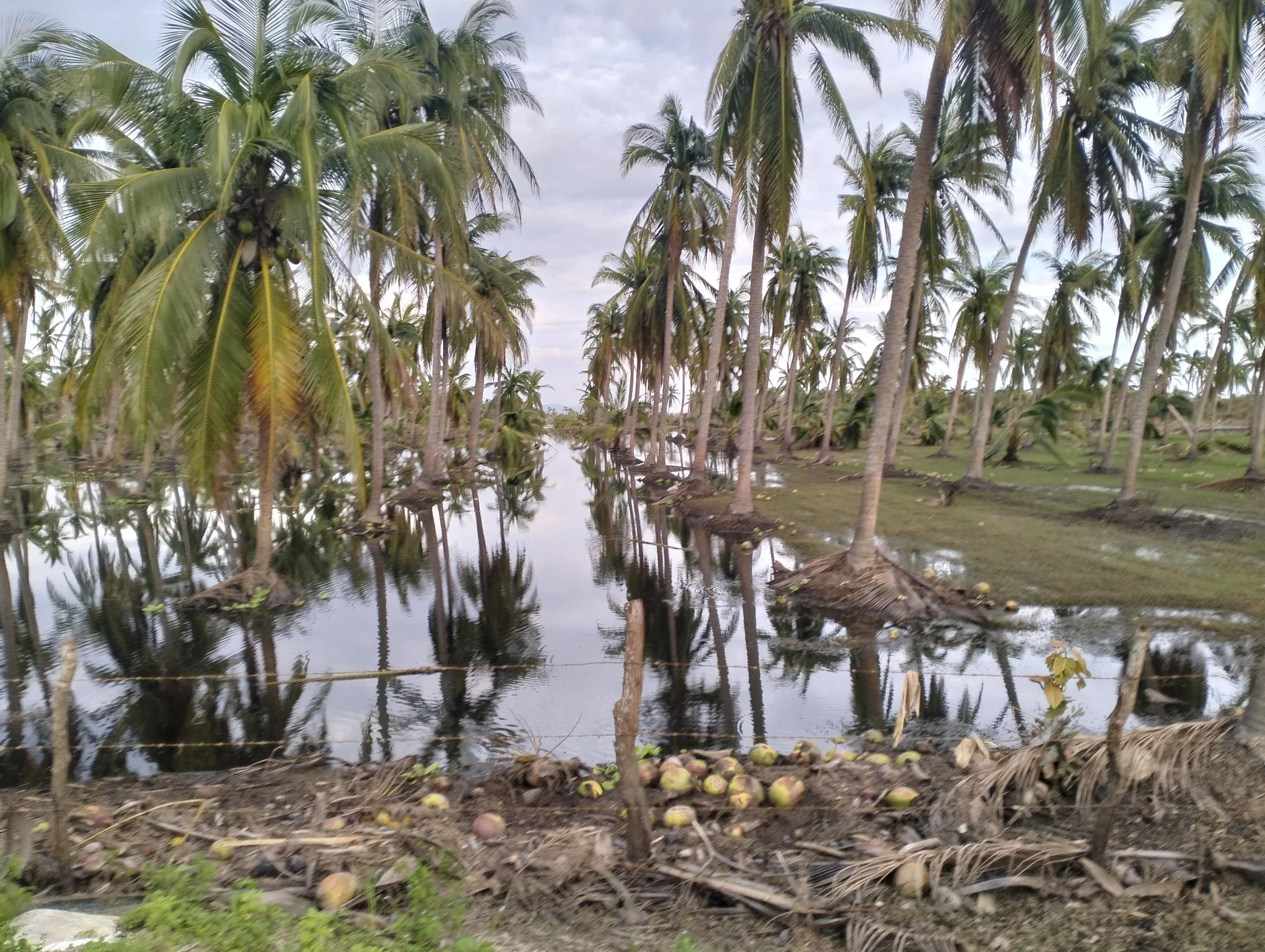
Photo Credit: EPOCA A.C., 2025
Abstract: This paper utilizes decolonial theory and public anthropology to survey local ecological concerns expressed by community members in the Costa Chica cultural region of Mexico. The research also factors the economic and racial insecurities within the region that are also disproportionate to the rest of the country. Also, it discusses what role does the political economy and climate change policies possibly play in migration and/or displacement in the region.
Although the canon of climate studies and literature is very extensive, the accessibility to climate change awareness still appears to be a large disconnection between national governments and local communities most vulnerable to climate change, similar to the Costa Chica region. This paper explores these ideas from an anthropological perspective. As well, a review of both music and visual arts produced by local Afro-Mexican artists is considered as possible methods to: bridging the information gap between governments and local communities, informing the local communities on climate change, and mobilizing greater appeals to the national government for progressive oversight and resources to the region.
Intro
The prefix of this article’s title is “Agua Escondida” meaning “Hidden Waters”. The title is demonstrative in its meaning as it relates to water as the all-encompassing resource of life including the surrounding southwestern coastal region of Mexico. However, the “hidden” effect or condition of the coastal waters is a revelation on the community’s inconspicuousness on the possible climate change effect. The “hidden” effect is the enigmatic energy of the hurricanes or tropical storms that confronts the region seasonally and intrusively. Or, it’s the looming waters along the frontera (frontier) border that migrants approach regularly in search of work and material sustenance to remit to their families in their home of origin in Costa Chica, Mexico and beyond. It’s a revelation on water as the “hidden” resource essential for the cultivation of agricultural foods which requires “about 70 percent of all water used for human production and consumption” (Kehl 2013). The “hidden” reference also muses on the tense waters at the beaches in the city of Puerto Escondido in Costa Chica, Mexico.
This paper is written for gaining better clarity on climate change informational awareness and migration/displacement in the Costa Chica region of Mexico. Most particularly, the socio-cultural complexes of climate change awareness and migration in Costa Chica, Mexico is considered using art advocacy. The research data is sourced through informed consents for group-format, semi-structured interviews, participant observations, primary and secondary sources, music and visual art reviews, and photography. For the 1-hour-formatted group interviews within the communities, questions were fielded to the members to learn about the impacted social experiences two months after Hurricane Erick.
The complexity to narrow the gap between the theory of environmental awareness and one’s actual practice of environmental conservation could be particularly attributed to one’s limited guidance and ideas on the solutions to soften environmental stress or destruction. One may tend to imagine that environmental awareness and preservation begins with philosophically or spiritually feeling connected to or experiencing a sense of oneness with nature. Conversely, a different suggestion is that humans should be “stewards” within their own environment which would position them to be separate from or dominants of nature (Vinings, Merrick and Price, 2008:2). Upon the observation that Hurricane Erick critically impacted the living and sustainability conditions of families and neighbors in Costa Chica, Mexico, there commenced the realization and significance in understanding the daily challenges impacting the region (and elsewhere) and the specific environmental resource data. This research acknowledges my previous cultural immersion and temporary residency in the Costa Chica region while also teaching and researching the cultural contexts of identity and race in the region. My earlier research on the cultural contexts of identity and race had been unmindful to the environmental changes or challenges of climate change in the region. In this regard, this article is an inquiry on the accessibility of localized climate change information in the region, which had not appeared to have been consciously evident within the past decade.
Public Anthropology and Decolonization
Given the circumstances of climate change being impactful on a global scale and affecting both local and international policies, the philosophies of public anthropology are utilized to probe the socio-cultural complexes of climate change and migration in Costa Chica, Mexico. Public anthropology applies social theory to the advancement of public advocacy and social progress within communities or shared collective spaces. Within this regard, public anthropology seeks to address the social inequities within race, class, gender, sex and environmental dynamics. (Harrison 2016)
Because this research considers the social existence and realities of those that are traditionally marginalized, such as Afromexican and Indigenous groups, etc., decolonial theory is necessary in the work to remove or overcome the conventional social barriers that have historically stigmatized such communities for such a long time. Decolonial theory acknowledges and appreciates the living truths and values of the local, non-traditional, “grounded intellectual” voices and artistic ideas that have been historically roadblocked or disallowed from shaping theory within the canon because of their non-privileged social status. Decolonial theory calls for eliminating the hierarchical power systems that have historically dominated and appropriated Black/African, indigenous systems, women, non-heteronormative identities and natural/structured environments. (Harrison 2016)
The research is grounded by also using informal sources from Afromexican and Indigenous groups or other marginalized collectives in Mexico and abroad. It is useful and leveling to explore beyond the boundaries of western knowledge systems and seek to understand traditions or ideas of Afromexicans and Indigenous populations’ ways of understanding and existing; for it may help to find and bridge solutions to current global challenges. (Harrison 2016:165-170).
Cultural Anthropology and Climate Change Education
While there’s a significant canon of studies and literature on climate change overall, Susan A. Crate wrote a very important article in 2011, “Climate and Culture: Anthropology in the Era of Contemporary Climate Change”to encourage more development in climate change work within anthropology studies that focuses more on the socio-cultural context using ethnographic methods, participant observations, place-based community research and global negotiations and discourse work. For anthropology research, climate studies have usually only been reviewed within the scope of environmental or archaeological sub-disciplines. Albeit, general environmental research of the region is seemingly limited (Crate 2011). Nevertheless, cultural studies are important to which it should survey the effects of how climate change “frames the way people perceive, understand, experience and respond to elements of the worlds which they live in” (Crate 2011:178). For example, in the aftermath of Hurricane Erick in the region in June 2025, myself, Dr. Stacy Matthews Branch and EPOCA A.C., a human rights organization based in Costa Chica, collaborated to organize a hurricane relief fund and to immediately deliver fresh foods to seven communities in the region. EPOCA A.C.’s office is located directly in the town of Santiago Pinotepa Nacional, Oaxaca. The organization observed, as well as, experienced the wrath of the difficult storm. In addition to surveying the material damage of the region, EPOCA A.C. also evaluated the cultural hardship experiences within many of the communities. In the inquiry to them about climate change awareness in the region, Simon Nestor Ruiz Hernandez, founder and organizer of EPOCA A.C. proved the point for the need for better informational awareness within the community. He admitted that the awareness and initiatives are “..a very serious problem but the actions carried out are very few and of little penetration in our consciences. But this hurricane has since aroused a lot of reflection.’” (Columbus 2025) This should also give impetus within anthropology fields about how to work with data analyses and methodology to bring better awareness of climate change and to improve the efficiency in the research. This is equally as important as fielding necessary discussions out in the communities.
In August 2025, there were engaging discussions with Costa Chica community members in various pueblos, el mercado (market) and even in taxis about the individual or collective experiences of the hurricane event, as well as accounts of the region’s history. The data was very relevant to that it offered context to the technical analysis of sustainability studies. It’s the cultural and socio-historical data between local communities or distinctive geographical regions that gives people empathic or qualitative insight into climate change experiences.
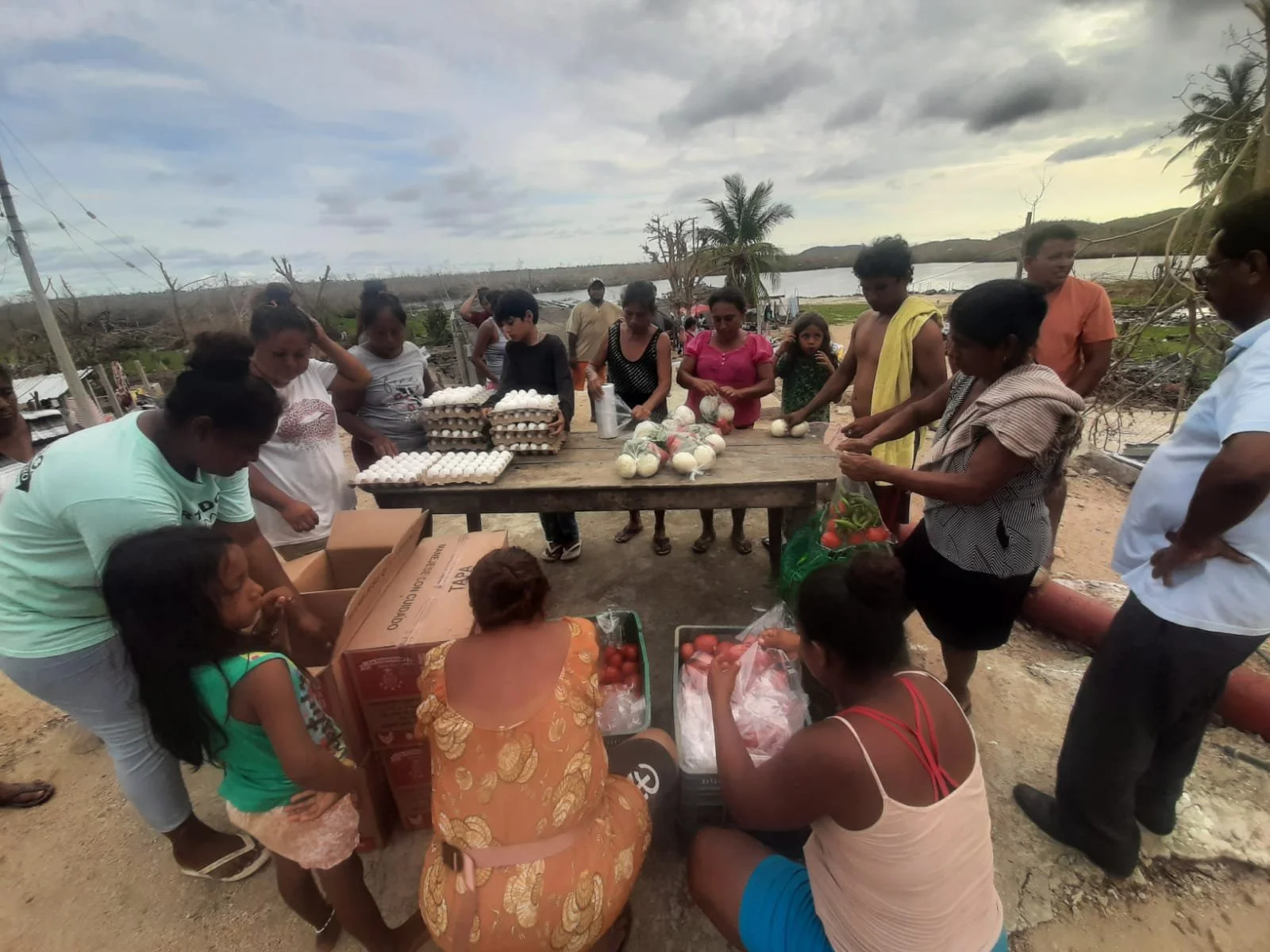
Place-based community research, as discussed by Crate, surveys the local effects of climate change, the direct subsistence in the local environment, the critical inhabitability of the community’s local living space and also the human rights and necessity of unpolluted water and sustainable levels of water supply (Crate 2011:179). Two months after the hurricane, it was apparent that there were daily challenges that were still conditioning the community’s suitable living standards. Topic matters on the availability of cultural food staples should follow an ongoing assessment in relation to symptoms of climate change, as also actively being discussed on a global level. During the hurricane recovery period, EPOCA A.C. sought to organize and deliver locally produced fresh foods to families for emergency sustenance. Sourcing labor and fresh food resources directly from the local environment were also intended to support the local economy during their course of social shock caused by the natural disaster. (Columbus 2025)
Photo Credit: EPOCA A.C., 2025
On a global scale, climate justice and human rights securities usually have oversight in the global negotiations and discourse with international-level entities such as UNESCO. And so, Crate prescribes critical collaboration ethnography methods to complicate and strengthen collaborative approaches that include bridging the separation between global and local climate change discussions. Multi-sited ethnography solutions connect various spaces - from local to global - impacted by climate change. As well, models such as the cognitive frame/cultural approach aims at understanding how the inclinations within local cultures are affected by climate change (Crate 2011:182).
Whereas, the global and local outreach on informing communities about the impacts of climate change still proves to be challenging, Marianne Krasny (2020) engages in thoughtful research in her book, Advancing Environmental Education Practice, about the challenges in defining climate change and utilizing the appropriate language that is tailored to various, diverse identities and personalities. In her book, the writer also asserts different knowledge-based methods that could be effective in influencing communities with ideas about ecological protection and stewardship. This article seeks to explore more of her ideas that are relevant to the socio-cultural experiences of the Costa Chica community (Krasny 2020).
Visual Arts and Environment Education

There are various methods or mediums that can display the useful role that art and identity can perform in the advocacy of communicating awareness of certain social circumstances. In terms of climate change, music and film are the most powerful mediums to convey such awareness within the local communities. For example, Jose “Yo MC Youalli” Garcia Torres is an Afro-Mexican Music Composer and Hip-Hop Artist whose ancestral roots extend between the Costa Chica and Costa Grande regional zones. While he’s very diverse in style and concepts, his music tends to convey themes on history, identity, spirituality, solidarity, etc. His song,”Vamos ya” is a progressive track that mobilizes and empowers people towards forward movement in ideas and action. Some elements of the song express political advocacy on environmentalism with references to the consequences living in excess, pollution, and ecological deterioration (Garcia Torres 2019) :
Photo Credit: youallig.com
Destroying Mother Earth Natural Resources,
Mining Companies From the Desert to the Mangroves,
Looking for Gold They Destroying Life, Pollute the Air,
The Water Poisons and Everything Ends…
[snip]
Displacing Communities,
So Much Deforestation
In a direct discussion with Yo MC Youalli G regarding climate change, he highlights the significance of innovating practices or solutions to the ongoing environmental concerns and recognizing the “..people working on sustainable projects and sharing the knowledge of ecological options.” Granted that the people financing sustainable projects are likely to have exceedingly more material resources than many others and are vertically inaccessible to local, poor communities. The artist challenges the current economic model’s liabilities with a more egalitarian view of climate change initiatives and awareness, when he said, “...all of humanity must be informed. The vulnerability to a natural disaster is subject to all of humanity… Although they imagine that they will go live in a space city, they may not be able to take off...”
While also considering the usefulness of music, documentary films or storymaps to discuss climate change issues and initiatives on the local level, the idea of visual art advocacy is incorporated within this article to bring the discussion to a relative level in the communities. In the practice of art and environmental advocacy, Christopher Tilley and Kate Cameron-Daum’s book, Anthropology of Landscape: The Extraordinary in the Ordinary draws on the usefulness of creating landscape or environmental art to “restore the once vital balance between humans and nature” (Tilley and Cameron-Daum 2017). This text is definitely a remark on Descartes’ philosophical values or the Enlightenment period with the idea that western populations tend to consider humans and nature as separate entities and “anthrocentric”. (Vining, Merrick and Price 2008:1) Thus, it seems important to identify or contextualize art that is ethnographic and that which is independent and distinguishes itself from a western, class-based, elitist ethos. As well, it would be responsible for understanding how indigenous art has historically been vulnerable to exploitation and appropriation by the western art world. (Morphy and Perkins 2006: 7-8).
In the following sections of this paper, five visual art works are surveyed to interpret the stories and ideas told from local Afro-Indigenous artists within the community. The three artists: Ivaan Piza Hernandez, Albert.Nicolas and Baltazar Castellano Melo seemingly render themes or conditions that project community identity and environmental awareness including migration in the region (Castellano Melo 2022) (Piza Hernandez 2022) (Hernandez Nicolas 2007). The purpose of the art reviews is to consider the potential social advocacy detailed within the artworks that could likely draw association to community identity, climate change and other related social consequences in Costa Chica. The spoken texts captured by the primary and secondary sources are to signify and localize the grounded experiences and ideas of those within the community. While the art is not textual, the symbols and concepts within the vernacular pieces are explained as to why they are to the community as they relate to climatic environments and cultural identity (Harrison 2016:164-165). In the visual arts review, the role of identity politics is purposed to bear recognition, strengthen esteem, and advocate for intercultural cohesion. Identity politics benefits a community to reinforce “...dignity and self-respect when one is feeling especially vulnerable; they may be a source of solidarity and belonging when one is feeling alienated from one’s social environment...” (Bilgrami 2006:8)
Sense of Place and Identity in Collantes, Mexico
Artwork Credit: Ivaan Piza Hernandez, 2022
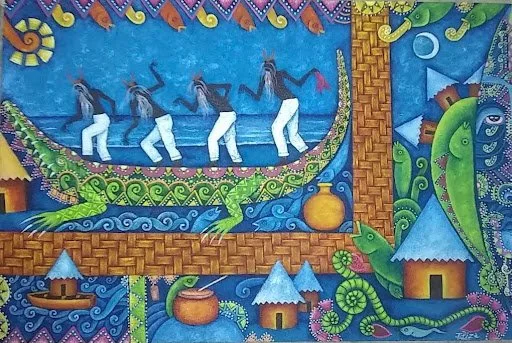
Such identity representations can be seen in the mixed technique artwork Los Danzantes Collanteños by Ivaan Piza Hernandez, Afro-Indigenous artist from Costa Chica. Much of the artist’s works is inspired from his cultural existence living in the Collantes community of Costa Chica. Los Danzantes Collanteños’painting depicts traditional dance performances by los diablos (the devils). There are four devils centered as the main subjects engaging in cultural performative dances on the beach in public among the living. In an alternative reality, their energies are transcending between the material and spiritual plane. Akin to West African revered orisha deity, Eshu, los diablos can be ritualistic tricksters in performance. They are characteristically unpredictable but they are also protectors of their communities. The spiritual observance and concepts differ from Christianity’s “good vs evil” dualistic culture. The dance of the devils’ performance can be conceptualized as a spiritual energy that ritualistically disrupts between the social order or moral code of the Catholic Church during fiestas and processions. (Gabayet 2018: 66) (Gonzalez 2009: 138)
In the painting, the dancers are in performance along Collantes Beach in its respective pueblo. The art encompasses the artist’s signature motifs, various cultural symbols of identity, personified figures and historical indexes that depict the material culture and ancestral memory that resonates with many within the region. Piza Hernandez typically paints with bold and vibrant colors that pop as a way to signify the energy of the cultural community. He paints natural living material or entities, man-made artisans, artifacts, or ecological features most culturally recognized in the region such as the redondo (round) houses which are stated to be West-African influenced. Redondo houses, however, have become an artifact of the Afro-Mexican past and thus an expressed, Afro-Mexican cultural symbol of the current. The redondo homes are now symbols particularly promoted by culture workers, as well captured in many diverse artworks, structures, and clothing. Here, Hernandez gives his artistic explanation of the Los Danzantes Collanteños
“The dancers represents the experience of the Afro-Mexican people of Collantes, Mexico. They are a living expression of our past and present. The fish are a symbol of our day-to-day living and spirituality - el tono or tonal, which is a vital part of each person in the town. The lizard is spiritual and a guide into the supernatural. “ (Piza Hernandez, 2025)
The culturally intimate environment that Piza Hernandez depicted within the artwork is what Krasny (2020) refers to as a “sense of space”. In Chapter 9 of Advancing Environmental Education Practice, Krasny describes (2020:128-131) the phrase “Sense of Place” as the psychological and emotional attachment to an existing space or place. Such values and attachments also bind an individual or community to an identity or symbolic representation of a place. Ivaan Piza Hernandez’s rendering of the ‘dance of the devils’ at Collantes Beach has an applied ecological significance that the artist not only signifies the meaning and attachment to it but also a place that he seeks to protect, culturally and environmentally. There's usually a biopsychosocial component tied to the sense of place or community. This concept is also most significant and useful to understanding the emotional impact of a loss of an ecological space or structural place due to disasters, displacement, economic development or death (Krasny 2020). Over the past few years, the artist has been no stranger to temporary displacement from his families’ home in Collantes due to the regions’ seasonal hurricanes or tropical storms. Most recently, his home suffered flooding and material damage that caused his family to be displaced from Collantes for almost three months after the Hurricane Erick event in June 2025. Although there were appeals made to the artist and his family to relocate further away from the regional zone, he was committed to returning to Collantes to attempt to rebuild although it had been difficult due to the limited resources that enter the community. Krasny (2020:129-133) also characterizes Piza Hernandez’s efforts as a sentiment of “place identity”, whereas a place has a physical or symbolic representation to an individual’s or group’s identity. Collantes is one of the larger and historically well-known Black pueblos in the Costa Chica region. The artist’s efforts to return to Collantes further speaks to the sense of identity that is attached to the pueblo, as conveyed in his artwork. “People are motivated to protect places that hold personal and valued meanings, places to which they are attached, and places which form part of their identity.” (Krasny 2020:131)
Sense of Place with Environment Consciousness and Advocacy
Ivaan Piza Hernandez’s hardship and attempt to re-stabilize after the natural disaster recovery efforts was certainly not an isolated experience or scenario. The anthropological research began two months after the hurricane with visits to six separate pueblo communities in the region; in addition to the municipality Santiago Pinotepa Nacional, El Ranchito, El Tamal, Paso de la Garrocha, Lagunillas and El Tamarindo. The sentiment among members within those communities were relatively the same with respect to the social experiences of Hurricane Erick’s aftermath. The emotional consensus among these communities was that there were still dire needs in the assistance of their recovery. The greatest destruction by Hurricane Erick was the collapsing or ripping of corrugated metal sheet roofs on many homes. Some people had to temporarily improvise with a home that still had 4 vertical walls intact; absent of a roof.
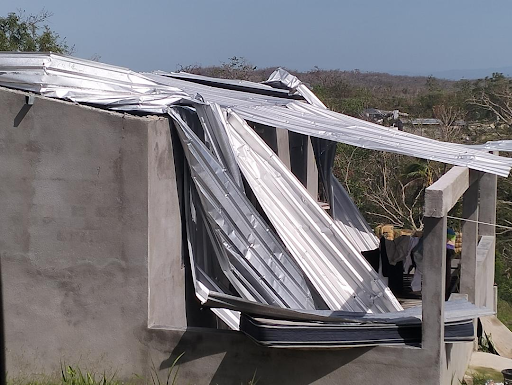
Photo Credit: EPOCA A.C., 2025
The Oaxacan government has supported families by providing them temporary food subsistence, daily use items such as toiletries, and 14 separate metal roof panels to replace any lost or damaged components to their existing homes due to the hurricane. For many of the community members, the 14 count metal roofs were deemed as insufficient to meet the needs of each family. The metal roof panels, albeit considered energy efficient components, lacked durability and resistance to harsh inclement weather such as Hurricane Erick. There was no guarantee that the panels would maintain their structure through the following hurricane season. In the community of Lagunillas, the only structures that sustained were the ones with concrete roofing material. A community member estimated the cost of a concrete slab roof installation to be $150,000 Mexican Pesos; an amount that overexceeds the general income in the region.
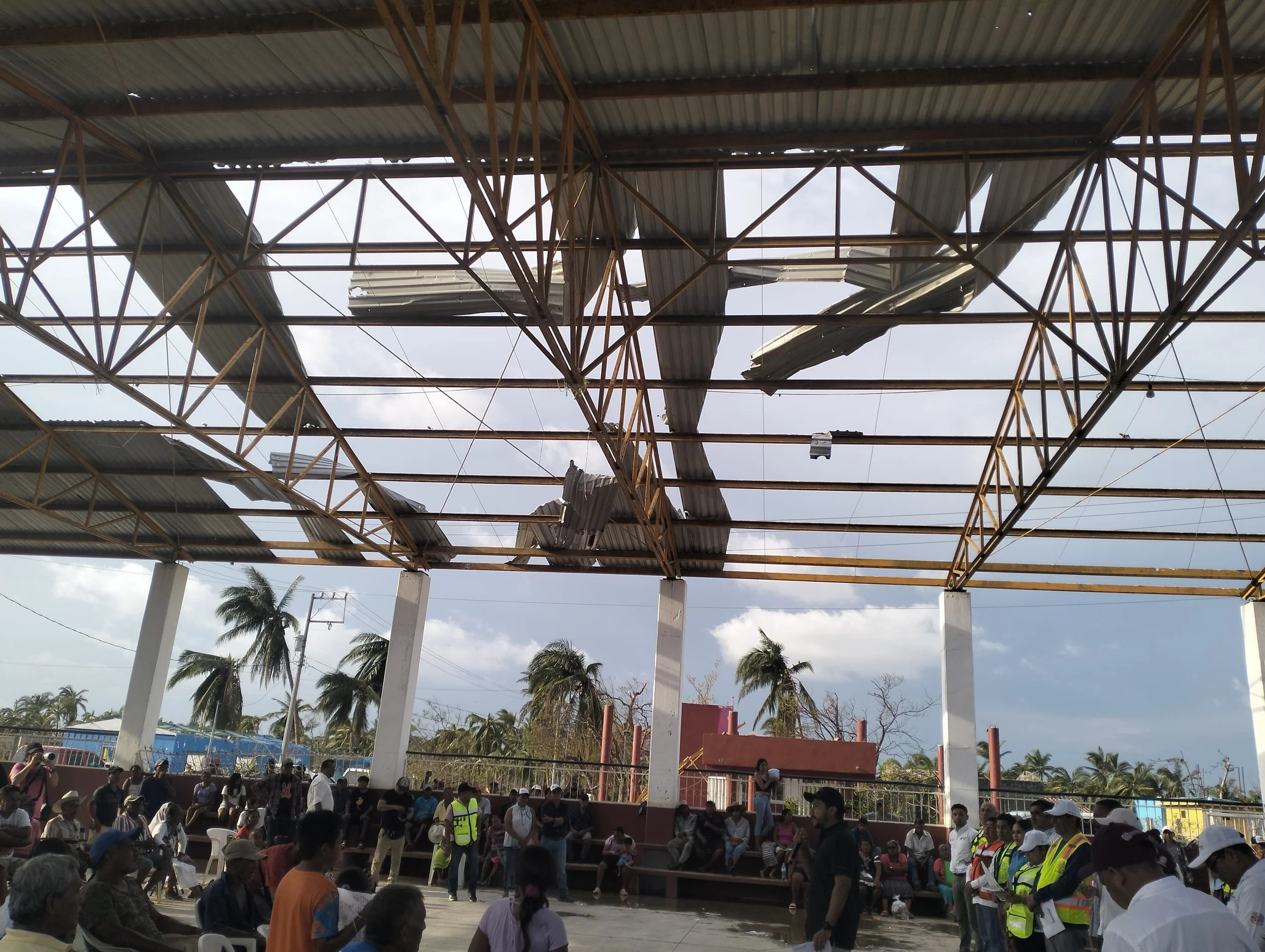
It’s practical that gender, class and ethnicity factors in the sentiment of a sense of place. And so, while in attendance of the community meetings, the concerns of some women were that there’s other facilities (ie. children centers, churches, recreational facilities or other auxiliary structures, etc.) that are just as culturally and spiritually relevant to the function of their communities. According to the women of the communities, these other facilities had not received material support to rebuild or recover after Hurricane Erick. The roofing of the health clinic in Paso de la Garrocha was also blown away. So the heat from the sun and lack of functional fans made medical services difficult for patients, doctors and staff. A medical clinic assistant commented, “When the brigade comes to give consultations, they have to come here to the agency, wait their turn, because there is no shade over there…. So the doctor also suffers from the heat because in fact the fans… are broken.” But then it has been very challenging to protect these spaces when there’s limited economic resources or support for the communities.
Photo Credit: EPOCA A.C., 2025
Yo MC Youalli G’s lyrics on the need for reforestation also appears to be a reality in Costa Chica (Garcia 2019). In our one-to-one chat, the hip-hop artist emphasizes his point on “...the alternative of planting different types of trees. You should also take advantage of the mountain range.” And so, in the Paso De La Garrocha community, there was also a concern about not having enough shade to protect the children during recreational hours or during the care of the children’s garden. This concern generated a follow-up inquiry about whether it was a question on the need for more natural shade such as trees or other high-canopy vegetation or a need for man-made covers and shelter structures. But, in general, the central issue was that the environment was very hot for the children to be active or productive in their community learning spaces. One community member said, “Well, we are going to plant some little trees so they protect us because we were left without a tree. Look, all the little trees were knocked down..” Krasny pointed out in her article that “People are likely to steward a place if they feel both a strong place attachment based on the place’s natural features and attribute to that place ecological place meanings.” (Krasny 2020:132) While this may be agreeable in a general sense, however, in the case of Paso de la Garrocha, their existing material means to maintain an environmentally conscious space is heavily burdened by the climate heat but also financially limited to manage such goals. In one pueblo, a single standalone classroom was unoccupied due to it still missing a roof to protect covering of the children. Economic support is still needed to re-stabilize pertinent community facilities further damaged by Hurricane Erick. These community spaces would require further short- and long-term assessments to determine the full ecological vulnerability.
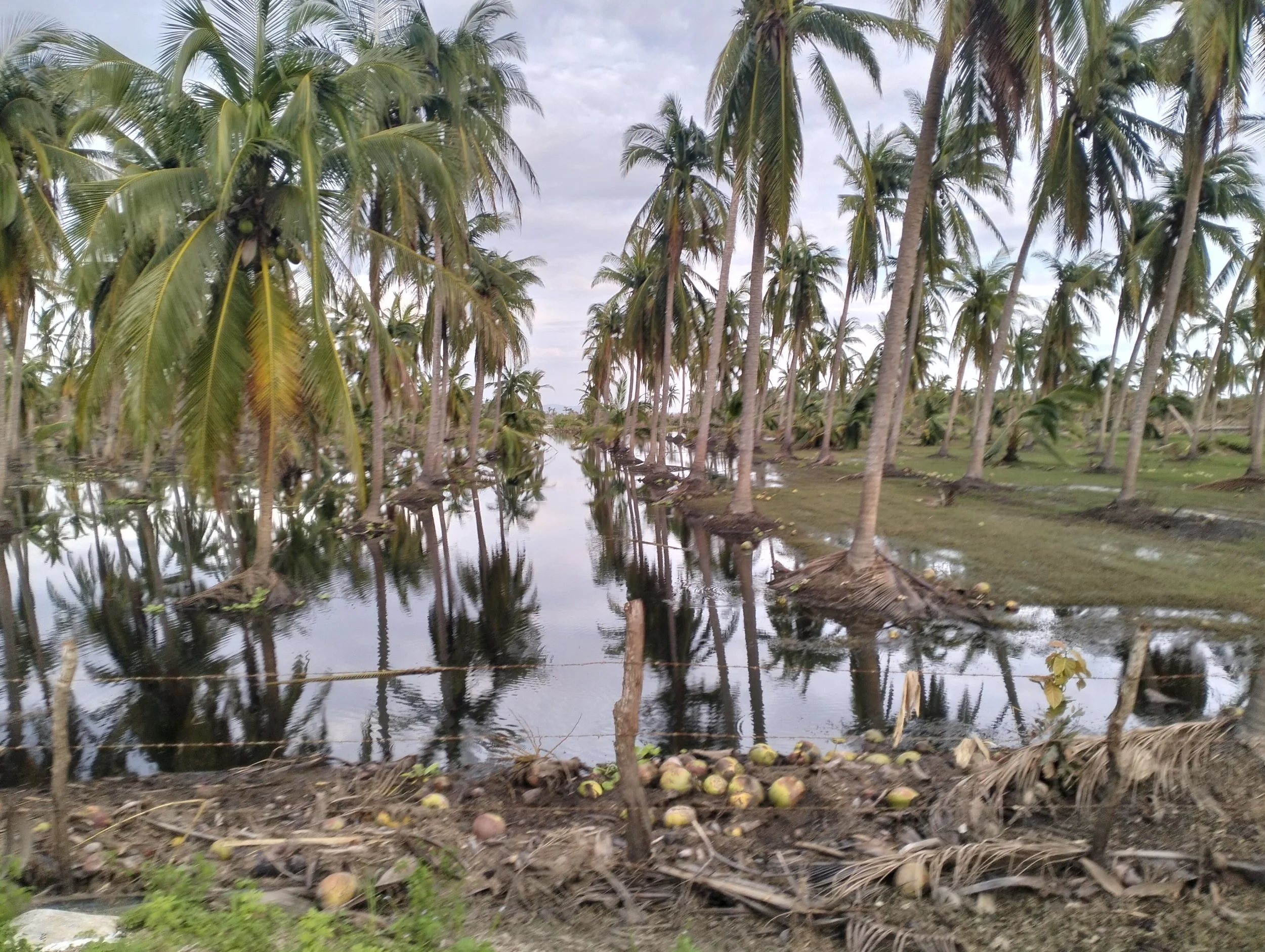
During the hurricane recovery period, EPOCA A.C. realized the severe impact of agriculture and livestock. They observed the heavy flooding or rain overflow of the coconut groves and numerous damaged, fallen coconut trees, which would likely require further reviews and assessments in the future. (Columbus 2025) As well in the aftermath, the Lagunillas community was also coping with their ongoing hardships. Besides the material damage, the other major concern was the low support and resources for farming material resources. During the month of August 2025, maize still had not been planted due to their supply of fertilizer being spoiled in quality because of water exposure from the hurricane. As well, the community suffered the loss of four cows in the storm.
Photo credit: EPOCA A.C., 2025
In one of the communities, there was a significantly large pochote tree that was estimated to be nearly 100 years old and approximately 200 feet long. According to the middle-aged landowner who lived on the property since birth, the tree survived many tropical storms in the region, however, it immediately fell at the strength of Hurricane Erick.
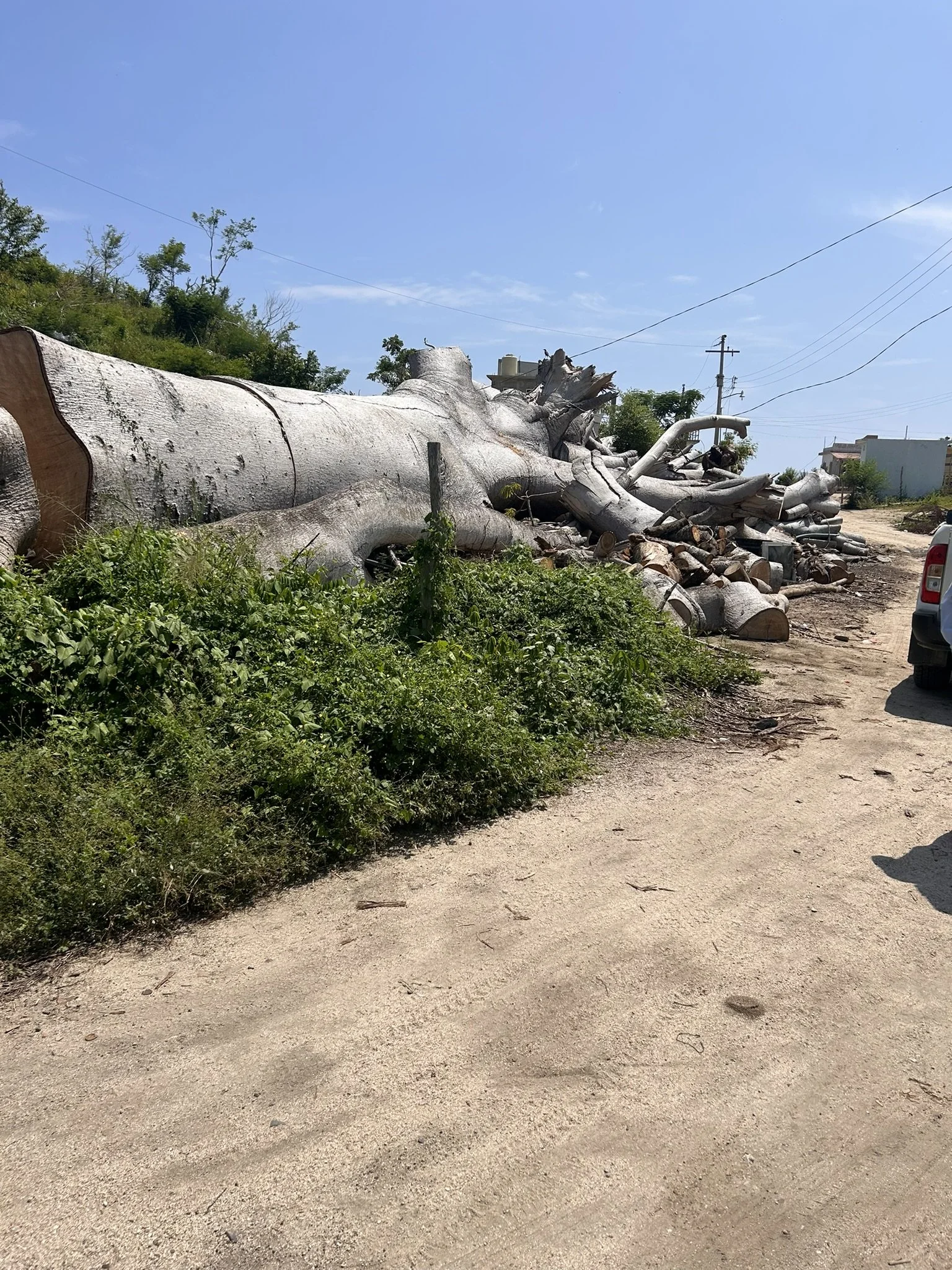
Fallen Pochote tree during Hurricane Erick, 2025
Photo credit: EPOCA A.C.
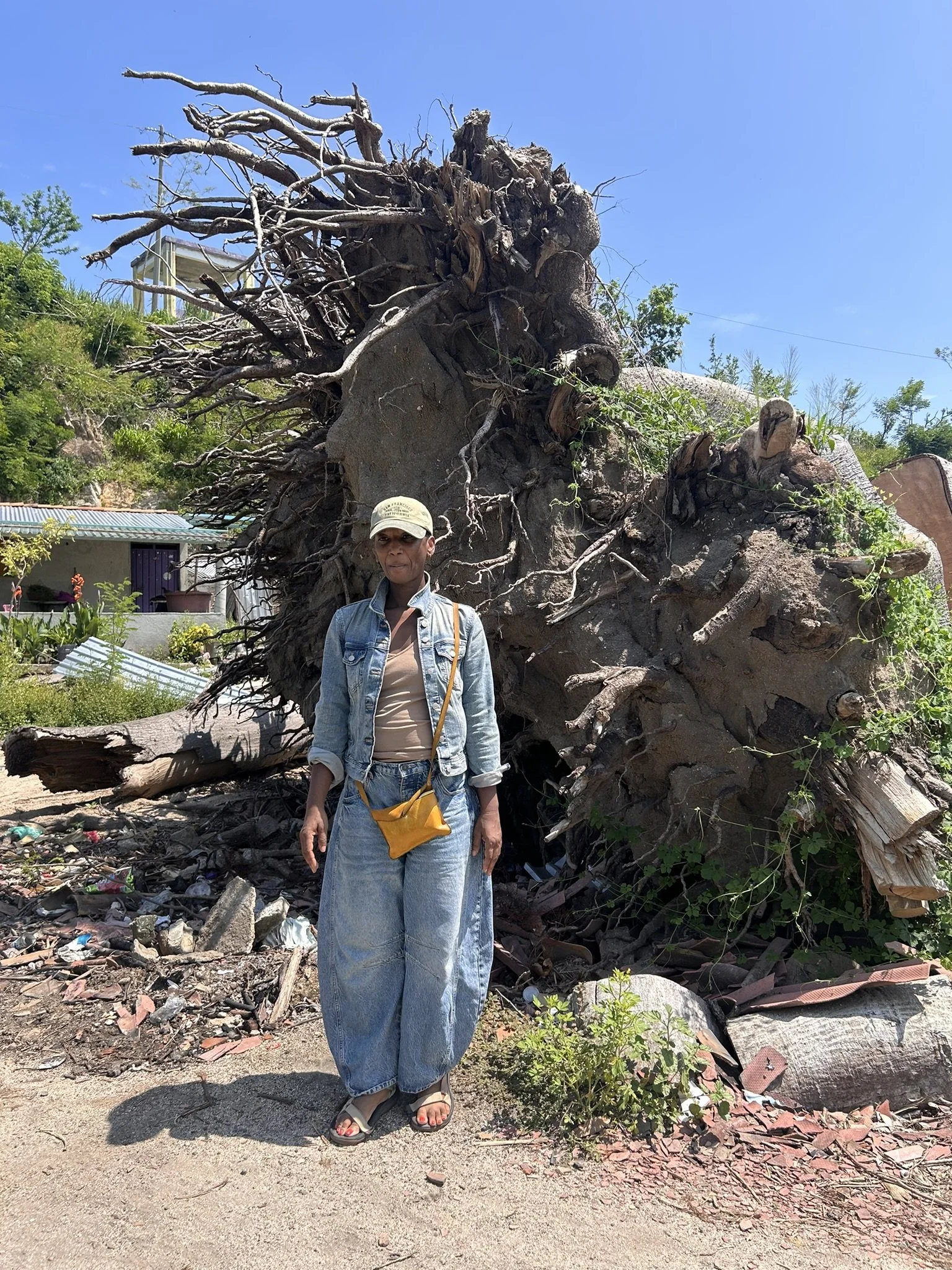
Roots of fallen Pochote tree during Hurricane Erick, 2025
Photo Credit: EPOCA A.C.
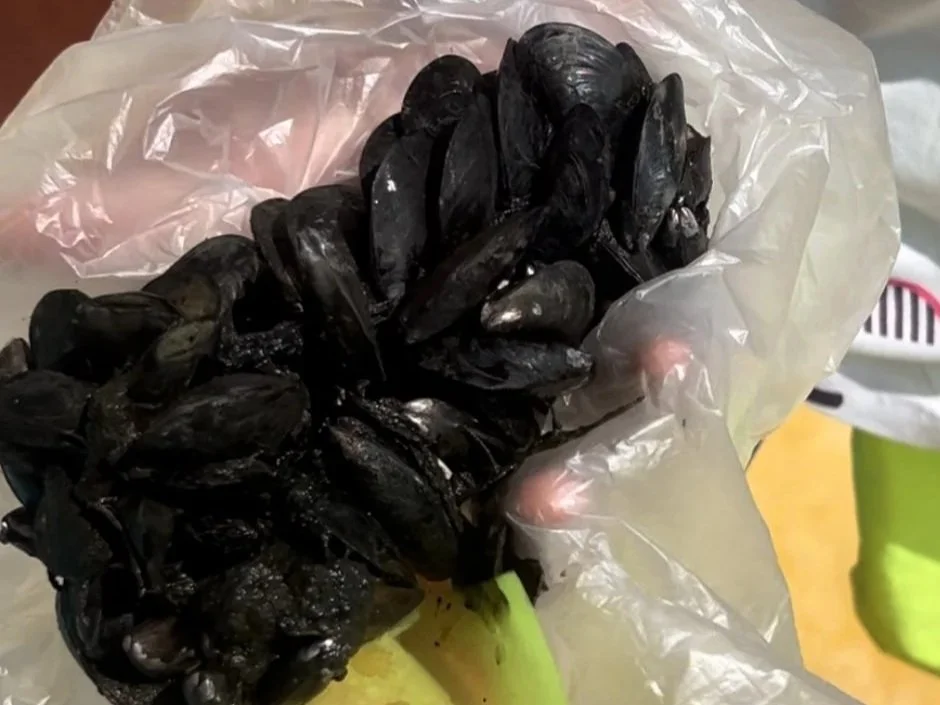
A female member explained the vulnerability that her community had been experiencing due to the scarcity resources in their lagoon. Fishing in the lagoon is a customary activity for sustenance. Fish and mussels are some of the main food staples within the community. Mussels are certain species of mollusks but not all mollusks are mussels. As a whole, mollusks hold significance to the Costa Chica community in holding harmony with the collective ecosystem as a natural water filter, food subsistence and other material culture resources (Galeana-Rebolledo et al 2018:230-239). However, the recent concern of the woman’s community is that the growth of the size of the varied fish and mussel species has relatively decreased over time and has become limited in supply. Community members suggested that the reason is due to the increasing temperatures of the lagoon. Further long-term studies would be applicable in this case, in addition to assessing resource management data or regulation standards. According to previous research, resource management programs were found to be limited in high, internation- -al touristic spaces like Acapulco, Guerrero, whereas the unsustainability risks are explained to be due to excessive fishing. Research on mollusks sourcing in Acapulco is discussed in the article, Socioeconomic Aspects for Coastal Mollusk Commercial Fishing in Costa Chica, Guerrero, México. The researchers believe that mollusks are excessively consumed in Acapulco. Fishing is a major source of socioeconomic activity along the coastal parts of Mexico. (Ramírez Sáiz 1987) Though environmentally, it’s caused unsustainability in the bio-diversity of natural sea resources; albeit those workers of the industry gain very little economically and still live along the poverty line after several years of working within the industry. (Galeana-Rebolledo et al 2018)
The researchers of the Galeana-Rebolledo et al’s article particularly discuss mollusks, of various species - “for human consumption, ornaments and handicrafts” - being a large source of exploitation in the state of Guerrero and therefore due to the limited understanding on the biology or ecology of the mollusks, resource management is lacking in the region. (Galeana-Rebolledo et al 2018:240) In the state of Guerrero, there’s very limited regulations or infrastructures for the fishing industry. Yo MC Youalli G, a native of the region, acknowledged the excessive fishing concerns as a conundrum because of the reality that there's a “demand and need for consumption” among the local communities. (Garcia Torres 2019) (Galeana-Rebolledo et al 2018:240) However, the excessiveness does not appear to be particularly attributed to the consuming pressures of local populations. Due to the long-term tourism industry services in Acapulco, the demand for mollusks (and other sea culture) in Acapulco - more so than other parts of Costa Chica - appears to exceed the capacity for the region and requires importing from elsewhere in the state or within the country (Galeana-Rebolledo et al 2018:240) (Ramírez Sáiz 1987). According to the research studies from 2013 - 2015, fishermen of cooperatives were not aware of biological-fishing studies. The writers conclude that “...overfishing of some mollusks of Costa Chica is affecting the sustainability of the resources and urgently requires fisheries and biological evaluations of the species that are being captured.” (Galeana-Rebolledo et al 2018:240)
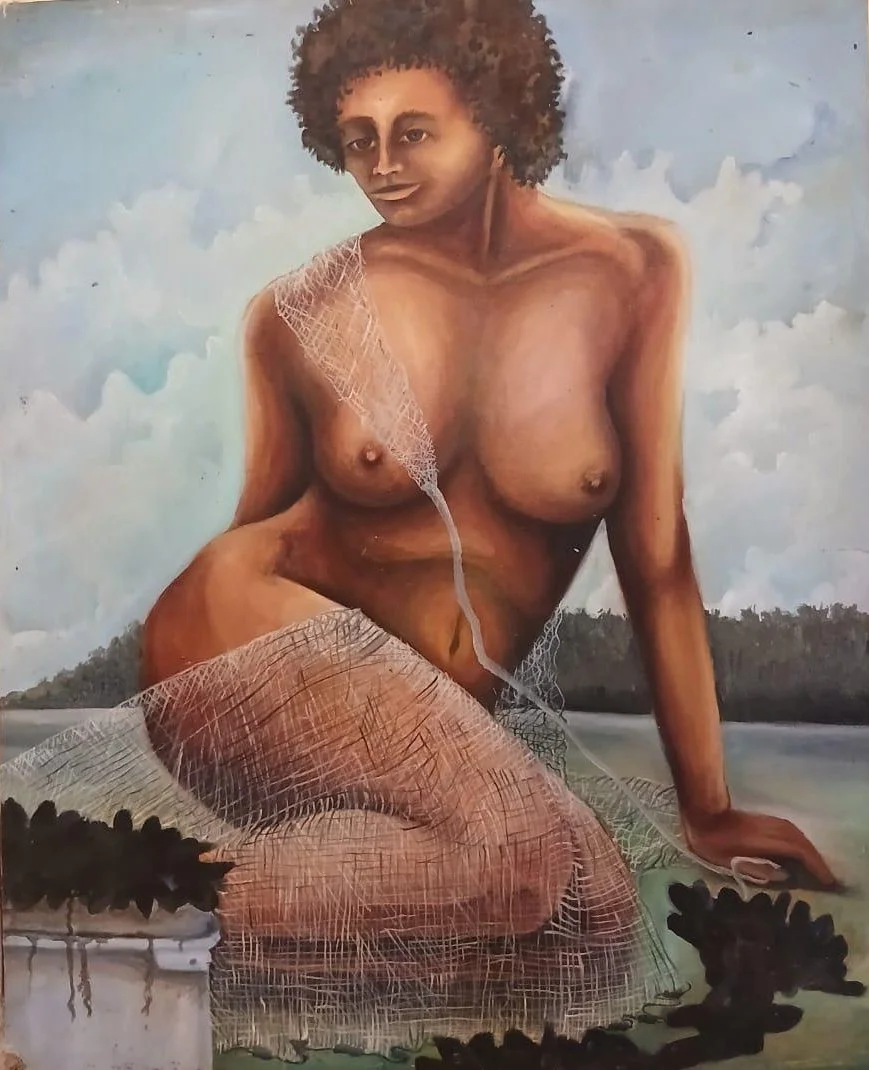
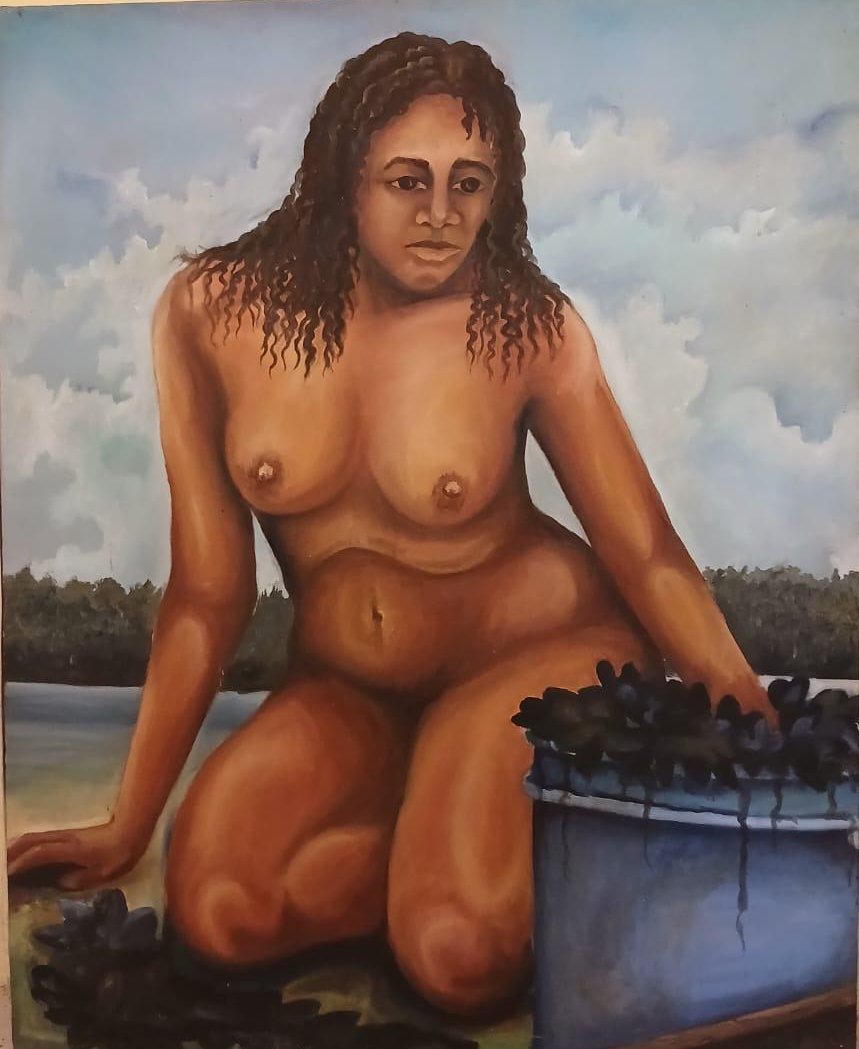
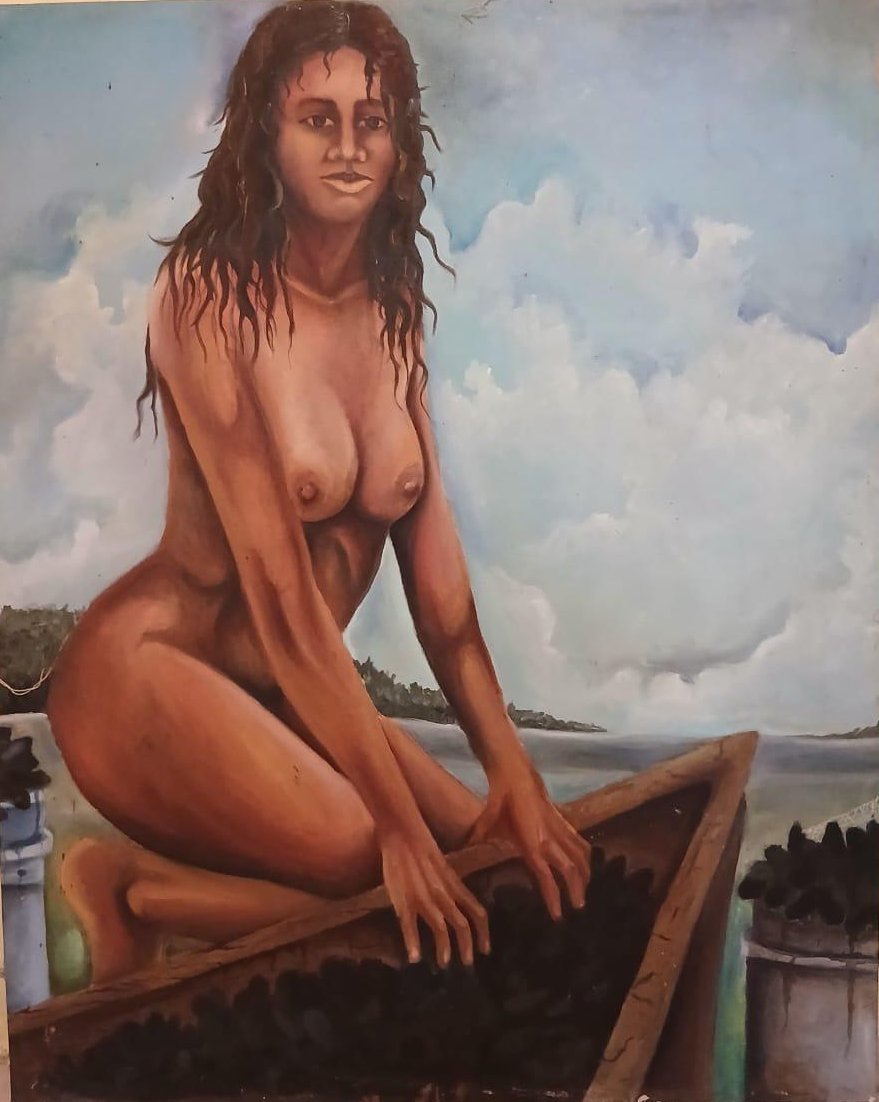
Artwork Credit: Albert.Nicolas, 2007
The embedded paintings of three bare women depict Afro-Indigenous women of Costa Chica sitting either along the bank, near the canoe or enwrapped in a castnet. All three women are shown surrounded by either containers of mussels, a canoe full of mussels or a collection of the shells located along the banks of the rivers (Hernandez Nicolas 2007). Albert.Nicolas, the artist of the three paintings, explained the artwork in the art exhibition in San Antonio, Texas, La Isla Bajo El Mar En Costa Chica: Afro-Mexican Identity Through the Arts and Social Activism:
“These three women each represent the Afro-Mexican identity without shame. They represent brown-skinned working women who are also fighters. There is an obvious natural sensuality in the swaying movement of each of their presentations that capture the unique quality of their eyes, mouth, hand, feet and hair. They represent the Afro-Mexican woman without fear. The woman with dreams and yearnings ... given the reason for her nakedness. These are warrior women with a strong deep gaze and quest to reinvent themselves in life. Nature is their companion in my homeland of Costa Chica. My tichindas (mussels) are the color of my skin, as mischievous as my curly hair with the inability to control them.” (La Zona Art Gallery 2025) (Hernandez Nicolas 2007)
These are working class women that collect mussels along the rivers to nurture and materially provide for their families and communities. Yet, there’s also an importance in unapologetically showing a sensual aspect of them that could easily get lost, overlooked or misinterpreted within the drudgery of their labor. There’s an importance of being reminded of their essence, strength, gentleness and sacrifices for work. Albert.Nicolas created these three paintings in 2007. The themes seem to focus on gendered labor, race and identity, and sexual politics of the political economy. However, with recent revelations about the scarcity in the sea culture, rivers or lagoons in communities like Acapulco, etc. the themes could be rearticulated in 2025 to also include eco-politics and climate change. (Hernandez Nicolas 2007)
Migration/Displacement/Economic Stress/Disaster
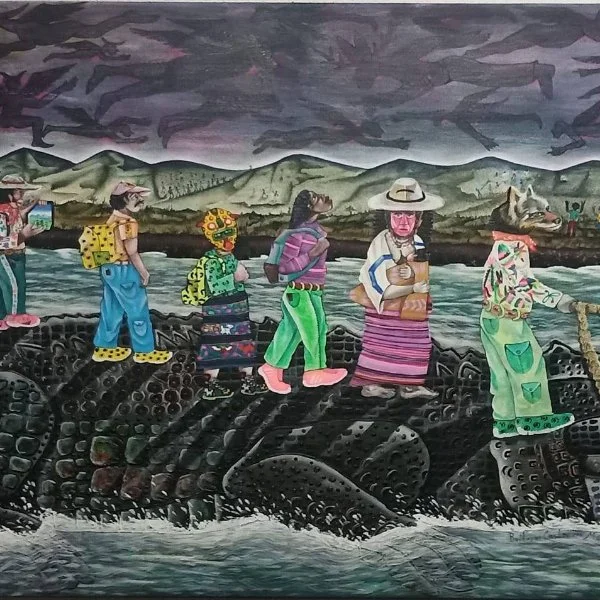
Artwork Credit: Baltazar Castellano Melo, 2022
Migration or land displacement may be typically perceived as an on-the-spot move reactionism to real-time natural disasters or environmental disruptions. But the interconnections don't have to be abrupt or immediate. It can be a gradual movement to relocate elsewhere in search of environmental or economic security as one's home of origin, sense of place or place attachment slowly erodes due to ecological changes or economic destruction. Migration or displacement becomes an elastic response to both microeconomic and macroeconomic factors which can include climate change or ecological distress of a community, as previously conveyed in the above-mentioned sections discussing Costa Chica communities like Collantes, Paso de la Garocha, Lagunillas, Acapulco, etc.
Since the 1980s, the flow of global south migration towards the northern U.S. border has gradually increased. This is due to migrants seeking economic sufficiency to care for families in their home of origin. Communities like Corraleo happen to be one of the communities with the most disproportionate women migration to the north of the Mexican border. In her research in Migración Femenina e Incidencias en la Crianza: El Caso de una Población Afrodescendiente en México, Anthropologist Citlali Quecha Reyna (2015: 89-119) discusses how the significant increase in female migration has caused some families to reorganize their traditional roles in caretaking in Corralero (Quecha Reyna 2015). The passing of the 1994 NAFTA policy created more dire needs in the region, as local, small-scale farms were losing their regulatory protections, they struggled competing with the larger, multi-national organizations imposed in Mexico and U.S. subsidized corn imports. This by making it difficult for local communities to fully sustain. The NAFTA policy has since created a perpetual, economic crisis in regions like Costa Chica, Mexico. Such economic conditions give community members the energy to migrate to areas where there’s greater jobs or economic vitality (Wise 2009) (Barnett 2011: 54.)
Baltazar Castellano Melo, an artist from Cuajinicuilaipa, Guerrero, captures migrants from Costa Chica approaching the frontera (frontier) border while navigating along the bank of the Rio Grande River; or on the imagined body of a hyper-exaggerated crocodile that is guiding them through their cautious journey along the border. They are either in personification of the tono/human duality and/or some of the characters are known as cultural or spiritual figures within the community. For example, the Coyote character or La Minga wearing a Pozahuanco - a Mixteco, traditional-type, wrap-around skirt. Flying above the migrants are the devils (los diablos) serving as spiritual protection of their journey en route. The painting brings relevance to the article on the subject matter of migration or displacement due to possible climate change. (Castellano Melo 2022)
Shweta Jayawardhan writes an in-depth article on climate change-induced displacement or migration. In “Vulnerability and Climate Change Induced Human Displacement”, she draws the causal relations between climate change displacement or migration and inequality. While poverty and socio- economically vulnerable areas can be the main drivers for migration and displacement, climate-induced migration can also be considered in this anthropogenic environment. Not all environmental displacements are caused by climate change. Nor does climate change discriminate. However, economically or racially marginalized populations are usually the most susceptible to climate-induced migration or displacement (Jayawardhan 2017). Climate change tends to “exacerbates social vulnerability which contributes to displacement.” (Jayawardhan 2017:104) Barnett (2011) discusses the communities’ most impactful natural disaster activities (i.e. hurricanes, flooding, mudslides, etc.) since the 1990s; triggering the need for migration, adaptation and resilience.
The U.S. media has tracked so much visibility and discourse on the politico-economics of the southwest U.S. border in recent decades. In the post-Hurricane Erick aftermath and previous disasters, this is an inquiry about how much of the communication about cross-borders migration between Mexico and the U.S. relates to topics of possible ecological distress in the region. Whereas, possibly having a discussion about climate change-induced displacement and migration and its relation to the viability of Mexican agricultural imports into the U.S. could offer a balanced and compassionate perspective between the U.S. and Mexico. Would the U.S. media and overall population be more holistic in the discourse if there was an understanding of how the reliability and interdependency of Mexican food imports to the U.S. was affected by the ecological stress, economic insufficiency and climate-driven migration and displacement within the southern region? Basically, the concerns of the climate anywhere should not be limited or fixed to just one respective region. Climate stress, whether in the Costa Chica region, the Gullah Geechee Community of St. Helena’s Island, or even on the island of Jamaica affects everyone, environmentally and materially, on the global collective. (Jayawardhan 2017)
Slavery, Colonization and Climate Change in Costa Chica
Ulisses Moreno-Tabarez is a Mexican American anthropologist that also has ancestral roots to Costa Chica, Mexico - most particularly in Guerrero. In his article, “Towards an Afro-Indigenous Eco-Politics: Addressing Ecological Devastation in Costa Chica”, he reviews the impacts, role and development of Afro-Indigenous engagement and politics in the awareness of climate change impact. Moreno-Tabarez assesses the connection between Mexico’s history of slavery and colonialism in the Costa Chica region and climate change (Moreno-Tabarez 2020). Whereas, Vining, Merrick and Price suggests (2008:2) that the separation between humans and the environment began in the advent of the technological ages of industrialization and urbanization, Moreno-Tabarez contradicts them and goes a little further back towards the 16th century in the early stages of North American colonial slavery; in this context, specifically Mexico’s slavery. In rural parts such as Costa Chica, subject interests for their abundant natural resources, exploitation of the ecological spaces began causing deforestation, wetland destruction, cattle ranching abuse, monoculture plantations, inhabitable fishing, infertile soil, and public health issues such as diseased outbreaks due to toxic dumping in natural bodies of water. Negative, long term, human-nature impacts of the region’s ecological system created conditions that have been difficult to regenerate itself. (Moreno-Tabarez 2020: 22-29)
Cultural Geographers Tello-Fernández and Montes-Vega discuss (2018) the foundation and history of Corralero, Mexico in similar regards dating as far back as the early 1900s after the Mexican Revolution while being inhabited by descendants of enslaved Africans. Prior to the 20th century, agriculture and ranching methods were the most predominant economic development activities inhabited by indigenous people. Similar to Moreno-Tabarez’s analysis about how the imposition of colonial capitalism in the rural region created inequitable land developments and thus environmental degradation and poverty. In the post-colonial period, increases in the fishing economy have also appeared to lead to excessiveness and competition. (Moreno-Tabarez 2020) (Tello-Fernández and Montes-Vega 2018)
Also, Moreno-Tabarez sees (2020:29-34) the 2019 legal recognition of Afro-Mexicans as significant in solidifying the history and identity of the regional population. But, as well, the constitutional recognition should now legally summon oversight and accountability on the federal government and other municipalities in terms of addressing the region’s concerns to climate change impacts. With this said, the anthropologist has prescribed three methods to addressing the ecological matters of the Costa Chica:
Land, territory and development: Due to federal policy not being in alignment with local policy, there should be more encouragement for federal funding for more optimal ecological farming and ranching methods. Inspire federal government coalitions and participation in advocating for ecotourism. It would ensure accountability on the local front and also prevent large, international private takeovers of the coastal shores.
Coalitional organizing - This would consider collaborations on the local front between diverse, community-based organizations with similar interests.
Knowledge interventions - Develop knowledge-based systems that are geographically relative to the current conditions and utilize relevant documentations that will continue to grow and serve as ongoing archives.
Conclusion
In a region like Costa Chica that’s situated along the Pacific Coast and most vulnerable to tropical storms, climate change awareness and the intersecting structures should be a summons order for everyone’s attention and participation. This article is a collection of ideas to bring economic and climate change awareness in Costa Chica, Mexico and associated migration factors using alternative ethnographic mediums such as art.
Environmental transformations or degradation of the Costa Chica region of Mexico are not present-day developments; albeit the recent events have caused a sense of immediate reflections and awareness. In recent revelations, place-based community research exposed the vulnerability that Hurricane Erick further imposed on the region. The place-based community research employed a multi-sited ethnography review, whereas the experiences revealed within the research places the Costa Chica communities’ concerns directly within the climate justice and human rights security conversation taking place on the global stage. The climate social realities experienced in Paso de la Garrocha, in terms of limitations to existing natural resources, are relative to Acapulco’s ongoing resource management dilemmas. As well, the U.S. food import dependencies of Mexico’s resources validates multi-sited ethnography methodological solutions as it strengthens the emphasis for the need for climate justice, human rights security and ultimately a more equitable and balanced economic system.
Climate change awareness and initiatives may be slow in the region, but the review of how progressive critical collaboration ethnography methods using art advocacy by local artists is helpful in realizing their sense of place and place identity within their artwork as cultural workers. The article encourages and challenges artists to continue to engage in discussions - using their preferred medium art form - about topic matters of climate change and/or climate-induced migration and displacement. But also, they should allow their art form to be used as carriers of healing and restorative action during the stressful durations of anthropogenic climate shifts and capitalism-induced distress and disruption. May the artists offer the gift to heal, inspire and inform among many other things.
AI Acknowledgment
The author declares that generative AI or AI-assisted technologies were not used in any way to prepare, write, or complete this manuscript. The author confirms that she is the sole author of this article and takes full responsibility for the content therein.
Informed Consent
This study was conducted with the informed consent of all participants. Participants were informed of the study's purpose, procedures, potential risks and benefits, and their right to withdraw at any time without penalty.
©s
References
Barnett, Elizabeth
2011
“Somos Costeños”: Afro-Mexican Transnational Migration and Community Formation in Mexico and Winston-Salem, NC. History Honors Papers: 1–127.
Bilgrami, Akeel.
2006
Notes toward the Definition of Identity. Daedalus 135(4): 5–14.
Castellano Melo, Baltazar
2022
Art of Depicting Migrants at the Mexico/US Border. Painting. https://www.facebook.com/photo?fbid=3150379091958736&set=pb.100009600282728.-2207520000.
Crate, Susan A.
2011
Climate and Culture: Anthropology in the Era of Contemporary Climate Change. Annual Review of Anthropology 40(1): 175–194.
Columbus, Barbara
2025
“Donations to Victims of Hurricane Erick in Costa Chica, Mexico”. GoFundme. https://www.gofundme.com/f/donations-to-victims-of-hurricane-erick-in-costa-chica-mx
Gabayet, Natalia
2018
De Los Diablos de La Costa Chica. Artes de México 128(Máscaras Rostros de la Alteridad): 61–67.
Galeana-Rebolledo, Lizeth, Rafael Flores-Garza, Juan Violante-González, et al.
2018
Socioeconomic Aspects for Coastal Mollusk Commercial Fishing in Costa Chica, Guerrero,Mexico. Natural Resources 09(06): 229–241.
Garcia Torres, Jose “MC Youalli G”
2019
“Vamos Ya”. Mangle. https://open.spotify.com/album/1QBgHP3GBwdb3pydKUA0Ga?si=QWvyv5MGSZm9hkL2ekhvaQ.
Golubović, Zagorka
2011
An Anthropological Conceptualisation of Identity. Synthesis Philosophica 26(1): 25–43.
Harrison, Faye V.
2016
Theorizing in Ex-Centric Sites. Anthropological Theory 16(2–3): 160–176.
Hernandez Nicolas, Alberta (Albert.Nicolas)
2007a
Woman with Cast Net (Mujer Con Atarraya). Oil on Canvas. 48" x 36".
2007b
Woman Near Canoe (Mujer Cerca de Una Canoa). Oil on Canvas. 48" x 36".
2007c
Woman at the Bank of Lake (Mujer En La Orilla Del Lago). Oil Canvas. 48" x 36".
Hernandez Piza, Ivaan
2022
Los Danzantes Collanteños . Visual Art Painting. Oil on Sea Sand Texture Painting, Mixed Technique. 48" x 36".
Jayawardhan, Shweta
2017
Vulnerability and Climate Change Induced Human Displacement. Consilience: The Journal of Sustainable Development 17(1): 103–142.
Kehl, Jennie
2013
The Hidden Global Trade in Water. Yale Center for the Study of Globalization. https://archive-yaleglobal.yale.edu/content/hidden-global-trade-water.
Krasny, Marianne E.
2020
Advancing Environmental Education Practice. Cornell Series in Environmental Education. Ithaca: Comstock Publishing Associates, an imprint of Cornell University Press.
La Zona Art Gallery.
2025
“La Isla Bajo El Mar En Costa Chica: Afro-Mexican Identity Through The Arts And Social Activism.” San Antonio, Texas. September.
Moreno-Tabarez, Ulises.
2020
Towards Afro-Indigenous Ecopolitics: Addressing Ecological Devastation in Costa Chica. City 24(1–2): 22–34.
Quecha Reyna, Citlali.
2015
“Migración Femenina e Incidencias en la Crianza: El Caso de una Población Afrodescendiente en México. Alteridades 25(49): 93–108.
Ramírez Sáiz, Juan Manuel
1987
Turismo y Medio Ambiente: El Caso de Acapulco. Estudios Demográficos y Urbanos 2(3): 479. http://estudiosdemograficosyurbanos.colmex.mx/index.php/edu/article/view/651, accessed February 24, 2026.
Tello-Fernández, Esteban, and Octavio Augusto Montes-Vega.
2011
Transforming Fisheries in La Costa Chica of Oaxaca: Fishers, Socio-Spatial Organization, and Natural Resources In Coastal Heritage and Cultural Resilience. Pp.183–208.
Tilley, Christopher Y., and Kate Cameron-Daum.
2017
An Anthropology of Landscape: The Extraordinary in the Ordinary. UCL press.
Vining, Joanne, Melinda S. Merrick, and Emily A. Price
2008
The Distinction between Humans and Nature: Human Perceptions of Connectedness to Nature and Elements of the Natural and Unnatural. Human Ecology Review 15(1): 1–11.
Wise, Timothy A.
2009
Agricultural Dumping Under NAFTA: Estimating the Costs of U.S. Agricultural Policies to Mexican Producers.
©2025 Barbara Columbus